

Assist: Top Picks, Features, and Buying Guide
Shop smarter with our guide to used cars with best lane keeping assist. Lane keeping assist helps keep your vehicle centered by monitoring lane markings and gently applying steering input when you start to drift. In the used market, this advanced safety feature is widely available across sedans, SUVs, and trucks from model years as early as 2016, and it is especially refined on many 2019 to 2023 vehicles. Below, learn how lane assist works, which brands and trims perform best, and what to check on a test drive. You will also find model year tips, feature comparisons, ownership insights, and links to research resources like used inventory, financing guides, and safety rankings. Whether you commute daily or take occasional highway trips, lane keeping assist can reduce fatigue, add confidence, and complement other driver aids such as adaptive cruise and automatic emergency braking.
From compact commuters to family SUVs, many used vehicles offer lane keeping assist bundled within driver assistance suites. Use our research resources to compare trims, confirm feature availability by VIN, and understand service considerations like windshield camera calibration. Explore related buyer guides, pricing research, and safety pages to build a shortlist that fits your budget, driving style, and comfort preferences.
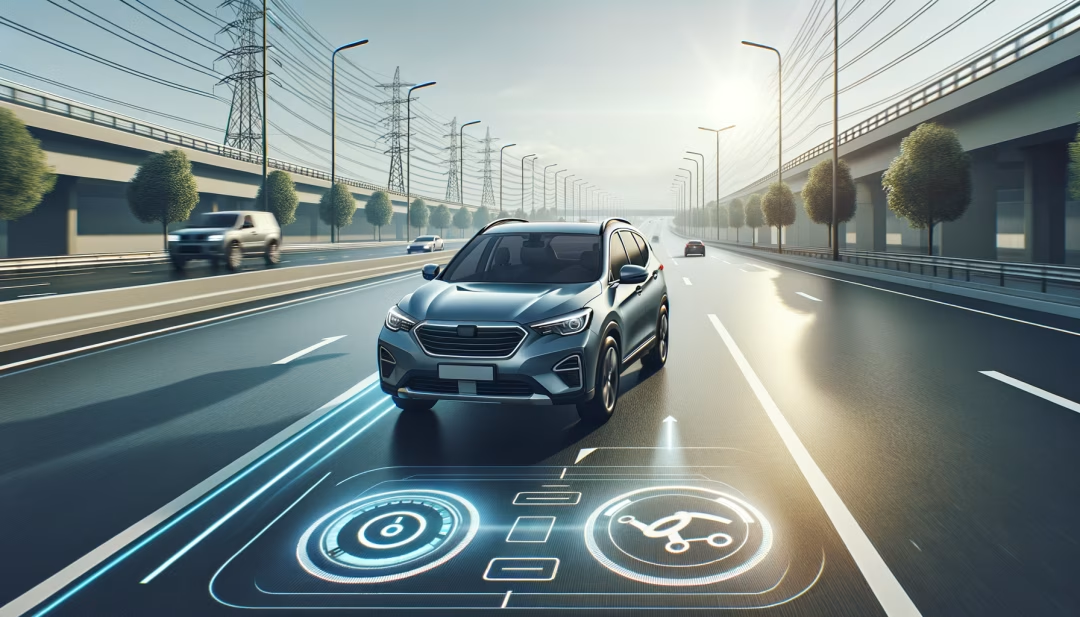
What Lane Keeping Assist Does and Why It Matters
Lane keeping assist uses forward-facing cameras and, in some systems, radar or additional sensors to detect lane lines. When the vehicle starts to drift without signaling, the system alerts you and may apply gentle steering torque to guide you back to center. Many vehicles also include lane departure warning, which provides an audible or visual alert, and lane centering or lane following, which proactively centers the vehicle when cruise control is engaged. The goal is to reduce unintentional lane departures, add comfort on long drives, and help drivers stay focused. Lane assist is not autonomous driving, and you must keep hands on the wheel and eyes on the road at all times.
Best Used Cars and SUVs Known for Strong Lane Keeping Assist
Performance varies by brand, model, year, and trim. Below are popular used choices frequently praised for confident lane support. Always verify equipment on the exact vehicle using the window sticker, build sheet, or a test drive.
- Toyota with Toyota Safety Sense: Corolla, Camry, RAV4, Highlander, Prius. Many 2017 and newer models include lane departure alert with steering assist, and 2019 and newer often add improved lane tracing assist.
- Honda with Honda Sensing: Civic, Accord, CR V, Pilot. Lane keeping performance is strong from 2017 onward, with smoother lane centering on 2019 to 2022 models when paired with adaptive cruise.
- Subaru EyeSight: Outback, Forester, Crosstrek, Legacy. Camera based system known for reliable centering and clear alerts. 2019 to 2022 models show meaningful refinements.
- Hyundai and Kia driver assistance: Elantra, Sonata, Tucson, Santa Fe, Kona, Forte, Sportage, Sorento. Look for Lane Keeping Assist and Lane Following Assist on 2020 to 2023 vehicles for confident lane centering on highways.
- Mazda i Activsense: Mazda3, Mazda6, CX 5, CX 9. Lane keep is subtle and pairs well with a comfortable highway ride. 2019 and newer models are most consistent.
- Ford Co Pilot360: Fusion, Escape, Edge, Explorer, F 150. Lane keeping can be assertive on newer software. Verify Lane Centering on specific trims and years.
- Nissan ProPILOT Assist: Rogue, Altima, LEAF. Often provides smooth centering paired with adaptive cruise on 2019 and later, especially on mid to upper trims.
- GM Lane Keep Assist: Chevrolet Equinox, Malibu, Traverse, Buick Envision. Works best on clear markings and pairs well with alert graphics.
- Premium brands: Lexus Safety System Plus, Volvo Pilot Assist, Mercedes Benz Driver Assistance, BMW Driving Assistance, Audi Driver Assistance. These often deliver refined steering feedback on 2019 to 2022 models.
Years and Trims to Target
Lane keeping assist became more common from 2016 onward, with major improvements by 2019. In mainstream brands, midlevel and higher trims frequently bundle lane assist with adaptive cruise, blind spot monitoring, and automatic emergency braking. For example, a 2019 to 2022 compact sedan or crossover often includes lane centering when paired with adaptive cruise. If you shop earlier years, lane keeping may be limited to warning and light steering corrections. Always confirm feature names, as manufacturers use different terms for similar functions.
How to Test Lane Keeping Assist on a Used Car
- Confirm activation: In the settings menu, enable lane keeping assist and lane centering if available. Ensure the steering wheel icon and lane markers appear in the cluster when the camera detects clear lines.
- Safe demo: On a well marked, low traffic road, keep hands lightly on the wheel and observe how the vehicle maintains position. The system should apply gentle torque, not aggressive steering.
- Check alerts: Intentionally drift slightly within the lane. You should see lane line color changes and feel a subtle nudge. Turn signals should suppress intervention when you intentionally change lanes.
- Pair with cruise: If the vehicle offers lane centering with adaptive cruise, engage both on a straight highway segment to evaluate steadiness, curve handling, and camera confidence in shadows or bright sun.
- Inspect windshield and camera: Look for recent windshield replacement. Some systems require camera calibration after glass work. Request service records or ask for calibration verification.
Limitations and Maintenance Considerations
Lane assist depends on clear lane markings and a clean windshield. Performance may degrade in heavy rain, snow, glare, construction zones, or faded paint. Camera based setups can misread temporary markings. If the windshield is replaced or the front camera is disturbed, calibration is often required to restore accuracy. Check for warning lights, stored diagnostic codes, or intermittent sensor errors. Regularly clean the windshield area near the camera, keep tires properly inflated to maintain tracking stability, and ensure alignment is in spec. When in doubt, ask a service department familiar with driver assistance systems to verify operation, especially if you notice pull or drift unrelated to the system.
What to Pair with Lane Keeping Assist
For the best highway experience, consider vehicles that combine lane keeping assist with adaptive cruise control, automatic emergency braking, blind spot monitoring, and rear cross traffic alerts. These features work together to reduce workload and improve situational awareness. Explore related guides such as Best Used Cars with Adaptive Cruise Control, Best Used Cars with Automatic Emergency Braking, and Best Used Cars with Best Parking Assist to round out your shortlist.
Budget Focus: Strong Lane Assist at Different Price Points
- Under 15000: Look for 2017 to 2019 compact sedans and small crossovers with mid trims. Compare pages like Best Used Cars Under 15000 and Best Used SUVs Under 15000.
- Under 20000: 2018 to 2020 compact or midsize models often add lane centering and better cameras. See Best Used Cars Under 20000 and Best Used SUVs Under 20000.
- Under 25000 and beyond: 2019 to 2022 vehicles with full driver assistance suites become common. Review Best Used Cars Under 25000 and Best Used Luxury Cars Under 30000.
Reliability, Safety Ratings, and Ownership Costs
Safety tech is most valuable when paired with proven reliability and favorable ownership costs. Before you decide, review crash test data and owner feedback for the exact model years you are considering. Useful resources on our site include Safest Used Cars, Used Cars with Best Crash Test Ratings, Most Reliable Used Cars, and Used Cars with Lowest Cost of Ownership. If you plan to keep the vehicle long term, check Used Cars with Longest Lifespan and Used Cars that Last Over 200000 Miles. For total value, match strong safety with low insurance and maintenance using pages like Used Cars with Lowest Insurance Rates and Used Cars with Lowest Maintenance Costs.
How to Verify Lane Assist on a Specific VIN
- Review the online listing for driver assistance suite names and cluster photos that show lane icons.
- Request the original window sticker or build sheet for feature codes like lane keeping, lane centering, or driver attention monitor.
- Use our Used Car Inspection Checklist and Used Car VIN Check Guide to confirm equipment and service history.
- During your test drive, validate camera confidence, alert visibility, and steering feel in both gentle curves and straight segments.
Driving Confidence Tips
Lane keeping assist works best when you remain engaged. Keep hands on the wheel, avoid relying on the system in bad weather or construction zones, and use your turn signals to communicate intent. If the system displays frequent unavailable messages, investigate possible causes such as dirty windshields, damaged front cameras, or misaligned wheels. Explore our How to Buy a Used Car, What to Look for When Buying a Used Car, and Used Car Inspection Checklist for more expert tips.
Recommended Research and Inventory Tools
- Browse Used Inventory and compare trims that list lane keeping or lane centering features.
- See what recently sold in Sold Inventory to gauge pricing and demand for popular safety packages.
- Estimate trade value with Value My Trade and review payment planning at Payment Options.
- Learn financing basics at How Does Used Car Financing Work and rate trends in Used Car Loan Interest Rates.
Helpful Links
- Research hub: Vehicle Research Resources
- Safety and driver aids: Used Cars with Best Driver Assistance, Used Cars with Best Forward Collision Warning
- Family and commuting: Best Used Family Cars, Best Used Commuter Cars, Best Used Cars for Long Commutes
- Ownership basics: Used Car Warranty Guide, Extended Warranty for Used Cars
- Connect with us: About Us, Meet Our Staff, Contact Us, Locations
Common Myths About Lane Keeping Assist
- It is not self driving: Lane assist reduces drift but does not replace steering input or driver attention.
- It is not always active: Most systems require clear lane lines, appropriate speeds, and driver hands on the wheel.
- It is not all the same: Names, smoothness, and capability vary by brand, model, year, and software version.
FAQ: Used Cars with Best Lane Keeping Assist
Toyota Safety Sense, Honda Sensing, Subaru EyeSight, Hyundai and Kia systems from 2019 to 2023 are widely praised. Premium brands like Volvo, Lexus, Mercedes Benz, BMW, and Audi are also strong. Verify equipment and software on the exact VIN for best results.
No. Lane departure warning alerts you if you drift. Lane keeping assist provides a gentle correction. Lane centering or lane following proactively keeps the vehicle centered, often when adaptive cruise is active. Check your owner manual or settings to confirm which functions are included.
Windshield replacement, front camera removal, wheel alignment, and software updates can impact lane assist performance. Many vehicles need camera calibration after glass work. Keep the windshield clean and ensure proper tire pressure and alignment for stable tracking.
Factory lane keeping assist relies on integrated cameras, steering actuators, and calibration procedures. Aftermarket options are limited and typically do not match factory performance. For best results, choose a used vehicle that includes the feature from the factory.
Performance decreases when lane lines are obscured by heavy rain, snow, dirt, or glare. Many systems will alert you when conditions are unsuitable. Always drive attentively and be ready to steer at any moment, regardless of system status.
Look for adaptive cruise control, automatic emergency braking, blind spot monitoring, rear cross traffic alert, and driver attention monitoring. Together, these features reduce fatigue and improve awareness on highways and in city traffic.
Explore More on Our Site
Continue your research with Home, the latest insights on Blog, and shopper tools like Finance Applications, Schedule Service, and Customer Survey. Review our Privacy Policy, Terms, and Visitor Agreement anytime.
