

Top Features, Models, and Buying Guide
Parking assist technology has become one of the most confidence-boosting features you can get in a used car. From simple rear parking sensors to full automatic self-parking, today’s systems can help you slip into tight city spots, navigate busy garages, and avoid costly scrapes. This guide highlights the used cars with best parking assist, explains key tech like 360 cameras and automated steering, and shows you how to evaluate a vehicle’s parking features in person. You will also find model and trim tips so you know what to look for, plus insight into reliability and ownership costs. Whether you are a new driver, a daily commuter, or someone who just prefers stress-free maneuvering, this page will help you find the right blend of safety, convenience, and value in a used vehicle outfitted with advanced parking assist.
Below you will find practical comparisons, step by step inspection advice, and curated model suggestions across sedans, SUVs, trucks, hybrids, and electric vehicles. Use this resource to understand how different systems work, which trims typically include them, and what upgrades are worth the price on the used market. Availability varies by year, package, and mileage, so always verify features on the specific vehicle you are considering.
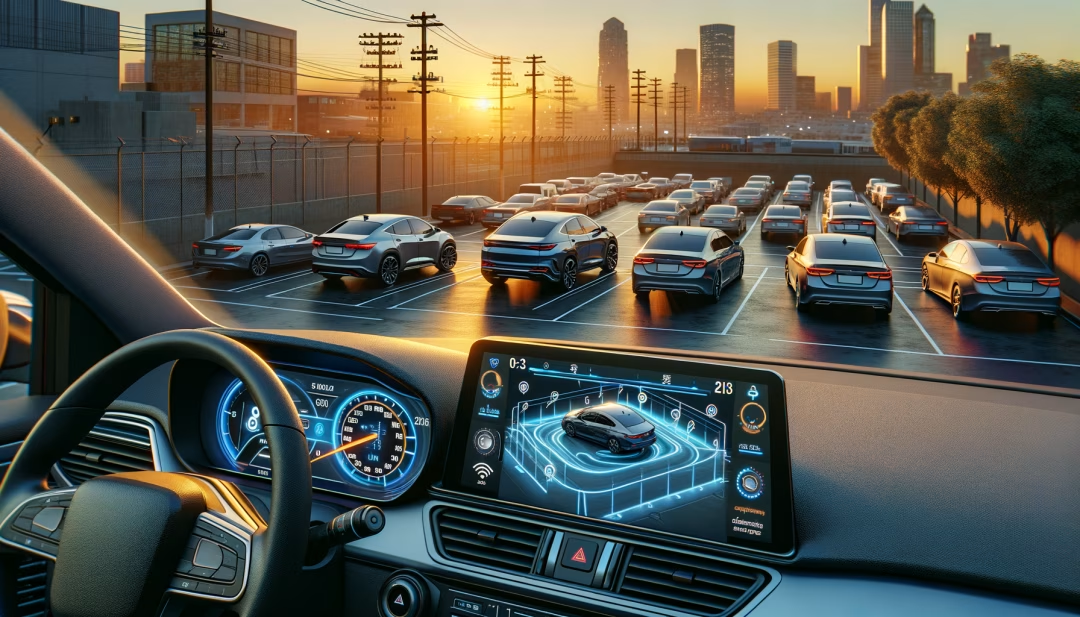
What parking assist means on used cars
Parking assist is an umbrella term for features that help you maneuver safely at low speeds. Systems range from audible distance alerts to near-hands free parking. The most common types include:
- Parking sensors: Ultrasonic sensors in the front and rear bumpers that beep or display distance to nearby obstacles.
- Backup camera: A rear camera that displays the area behind your vehicle, often with dynamic guidelines that move with the steering wheel.
- Surround view 360 camera: A stitched, bird’s eye view that helps you see curbs, lines, and obstacles around the entire vehicle.
- Automatic parking assist: The car steers itself into a parallel or perpendicular space while you control gear selection, acceleration, and braking.
- Rear cross traffic alert and automatic braking: Warns of or brakes for vehicles and pedestrians crossing behind you.
On the used market, these features can vary widely by year, trim, and option package. When you compare vehicles, verify the exact feature set in the listing photos, feature sheet, or infotainment menu.
Best used cars and SUVs with top tier parking assist
The models below are frequently praised for strong parking tech availability on select trims and years. Actual features depend on each vehicle, so confirm packages before you decide.
Compact and midsize sedans
- Ford Fusion (approx 2014 to 2020) - Available Active Park Assist on higher trims helps steer into both parallel and perpendicular spaces.
- Volkswagen Passat and Golf family (approx 2015 and newer) - Park Assist and Park Distance Control, often with a clear reverse camera.
- BMW 3 Series and 5 Series (approx 2016 and newer) - Park Assistant and optional Surround View for detailed 360 visibility.
- Mercedes C Class and E Class (approx 2015 and newer) - Active Parking Assist and Parktronic can scan spaces and steer in.
- Audi A4 and A6 (approx 2017 and newer) - Park Assist options with helpful top view camera on select packages.
Compact and midsize SUVs
- Ford Escape and Edge (approx 2015 and newer) - Enhanced Active Park Assist on select trims can handle parallel and perpendicular parking.
- Nissan Rogue and Murano (approx 2016 and newer) - Around View Monitor 360 camera makes curbside parking easier in tight areas.
- Toyota RAV4 and Highlander (select years) - Available Intelligent Clearance Sonar and Bird’s Eye View Camera on certain trims and packages.
- Honda CR V and Pilot (approx 2017 and newer) - Multi angle rearview camera and available front and rear sensors on higher trims.
- BMW X3 and X5, Mercedes GLC and GLE, Audi Q5 and Q7 (various years) - Strong combinations of Park Assist and 360 camera views.
Minivans and family vehicles
- Chrysler Pacifica (approx 2017 and newer) - Available Parallel and Perpendicular Park Assist on certain trims, plus sensors and camera tech.
- Toyota Sienna and Honda Odyssey (select years) - Available front and rear sensors with clear backup cameras and optional 360 view on newer models.
Luxury sedans and SUVs
- Lexus LS, ES, RX, and NX (various years) - Available Intelligent Parking features, high resolution cameras, and sonar systems on premium packages.
- Volvo S90, XC60, and XC90 (approx 2016 and newer) - Park Assist Pilot can scan and steer, with excellent 360 visuals on select trims.
- Cadillac CT6, XT5, and Escalade (various years) - Automatic Parking Assist and 360 cameras commonly available on higher trims.
Hybrids and EVs
- Tesla Model 3, Model S, and Model X (various years) - Autopark capability on compatible vehicles plus a wide camera and sensor suite. Feature sets vary by software and hardware generation.
- Hyundai Kona Electric and Ioniq family, Kia Niro and EV6 (select years) - Strong camera quality and available advanced parking aids on newer trims.
- Toyota Prius and RAV4 Hybrid (select years) - Useful parking sensors and cameras on higher trims, with 360 available on certain configurations.
How to evaluate parking assist during a test drive or walkaround
Hands on checks are the best way to confirm functionality on a used vehicle. Use the steps below to validate each feature and gauge camera clarity and sensor performance.
- Inspect bumpers for clean, undamaged sensor circles and camera lenses. Cloudy or cracked lenses reduce visibility.
- Shift to reverse to confirm the backup camera image is stable, bright, and free of flicker. Test at dusk and in bright sun if possible.
- If 360 view is equipped, toggle different views. Ensure the bird’s eye composite looks aligned with no severe stitching errors.
- Walk behind and to the sides with a second person while you back slowly to verify parking sensor beeps and distance bars trigger correctly.
- If automatic parking is equipped, try a low traffic lot. Follow prompts on the screen, confirm the wheel steers as expected, and verify the system can detect both parallel and perpendicular spaces if advertised.
Also review the vehicle settings menu. Many systems allow volume, sensitivity, and guidance line adjustments. Restoring defaults can help if a previous owner changed preferences.
Ownership costs, reliability, and what to watch
Parking tech is generally reliable, but it does add sensors, modules, and cameras that can be damaged by curb impacts, winter road debris, or parking lot bumps. Before you choose a feature heavy vehicle, consider the following:
- Sensor and camera replacement: Individual ultrasonic sensors are often affordable, but labor and bumper refinishing can add cost. OEM cameras are more expensive than sensors.
- Calibration: Surround view and advanced driver assistance cameras may require calibration after repairs or windshield replacement. Ask for documentation if recent body or glass work was done.
- Software updates: Some vehicles benefit from firmware updates that improve camera clarity or sensor logic. Check service history for updates performed.
- Winter performance: Road salt and grime can block sonar and camera lenses. Clean regularly and inspect protective gaskets around cameras for wear.
If you prefer predictable maintenance on advanced systems, consider models known for overall reliability. You can compare reliability focused picks on pages like most-reliable-used-cars and most-reliable-used-suvs. For shoppers seeking a balance of features and low ongoing cost, see used-cars-with-lowest-cost-of-ownership and used-cars-with-lowest-repair-costs.
Trim and package names to look for
Manufacturers often bundle advanced parking features in mid to upper trims or in optional packages. Look for phrases like Park Assist, Active Parking, Advanced Parking, Parktronic, Park Distance Control, Surround View, Bird’s Eye View, or 360 Camera in the listing. Common examples include:
- Ford: Active Park Assist or Enhanced Active Park Assist on Titanium, SEL, or higher trims.
- Volkswagen: Park Assist and Park Distance Control, often bundled with Driver Assistance packages.
- BMW: Park Assistant or Parking Assistant Plus, sometimes within Premium or Executive packages.
- Mercedes: Parktronic with Active Parking Assist, often standard on higher trims or part of Parking Assistance Package.
- Toyota and Lexus: Intelligent Clearance Sonar, Advanced Park, or Panoramic View Monitor on certain trims and tech packages.
If you are cross shopping body styles, you can also check best-used-sedans, best-used-suvs, best-used-minivans, and best-used-trucks for broader model research beyond parking tech alone.
Choosing the right level of assist for your needs
The ideal setup depends on where and how you drive. Urban and tight garage drivers often value 360 cameras and front sensors. Suburban drivers who parallel park occasionally may be happy with a clear backup camera and rear sensors. Frequent travelers might want the full suite including automatic parking for unfamiliar downtowns. Consider your budget too. On the used market, a trim one level up that includes parking tech can be more cost effective than retrofits or aftermarket solutions.
- Budget conscious: Seek models where sensors and backup camera were widely standard. Compare best-used-cars-with-backup-camera and best-used-cars-with-blind-spot-monitoring for adjacent safety value.
- Feature focused: Target trims with 360 camera and self parking. Cross check used-cars-with-best-driver-assistance to see what else comes bundled, like lane keeping or adaptive cruise.
- Tech and efficiency: If you also want excellent mileage, review used-cars-with-high-mpg and best-used-hybrid-cars for overlapping choices.
Verifying features on a specific VIN
Listings sometimes reuse template descriptions. To be certain the exact vehicle has the parking features you want, ask for photos of the infotainment parking menus, steering wheel buttons, center console park assist switch, and the bumpers showing sensors. You can also request a feature printout tied to the VIN. Our research resources such as used-car-buying-checklist, used-car-inspection-checklist, and how-to-check-used-car-history can help you confirm equipment and condition.
Budget planning and ownership value
Parking assist can reduce minor collision risk, saving money on touch up paint, wheel repair, and bumper work. If you park in tight areas daily, the convenience can be worth prioritizing, especially with high quality cameras and front plus rear sensors. For help balancing features with payment comfort, see payment-options and applications. If you have a trade, value-my-trade can estimate contributions to your budget. You can compare total value and demand on used-cars-with-best-resale-value and used-cars-with-lowest-depreciation as a longer term consideration.
Helpful links for deeper research
- Used Inventory for live availability and feature filters
- Vehicle Research for trims and options by model
- Best Used Cars With Backup Camera to compare camera quality picks
- Used Cars With Best Driver Assistance for feature bundles beyond parking
- Contact Us for questions about features on a specific VIN
- Explore more on Blog, About Us, Meet Our Staff, and Locations
