

Top Full Size Trucks Before You Buy
Shopping for a used full size truck and deciding between a Ford F-150 and a Ram 1500. This guide explains the key differences in towing, payload, comfort, tech, and ownership costs so you can match the right truck to your work and weekend needs. We cover popular engines like the Ford 2.7L and 3.5L EcoBoost and the Ram 5.7L Hemi, plus trim options from work ready XL and Tradesman to premium Lariat, King Ranch, and Limited, and Ram Big Horn, Laramie, and Limited. You will also find insights on best model years, what to inspect on a test drive, and how pricing and resale typically compare. When you are ready, browse our used inventory, value your trade, and schedule a test drive to confirm the fit. Use the in depth comparison below to choose confidently.
A used Ford F-150 often leads for peak towing, broad engine choices, and aluminum body rust resistance. A used Ram 1500 typically wins for ride comfort with coil spring or air suspension and a quiet upscale cabin. Your best truck depends on how much you tow, how you drive daily, and which features matter most. Explore our research, check recently sold examples for pricing context, and bring your trade details to streamline your deal.
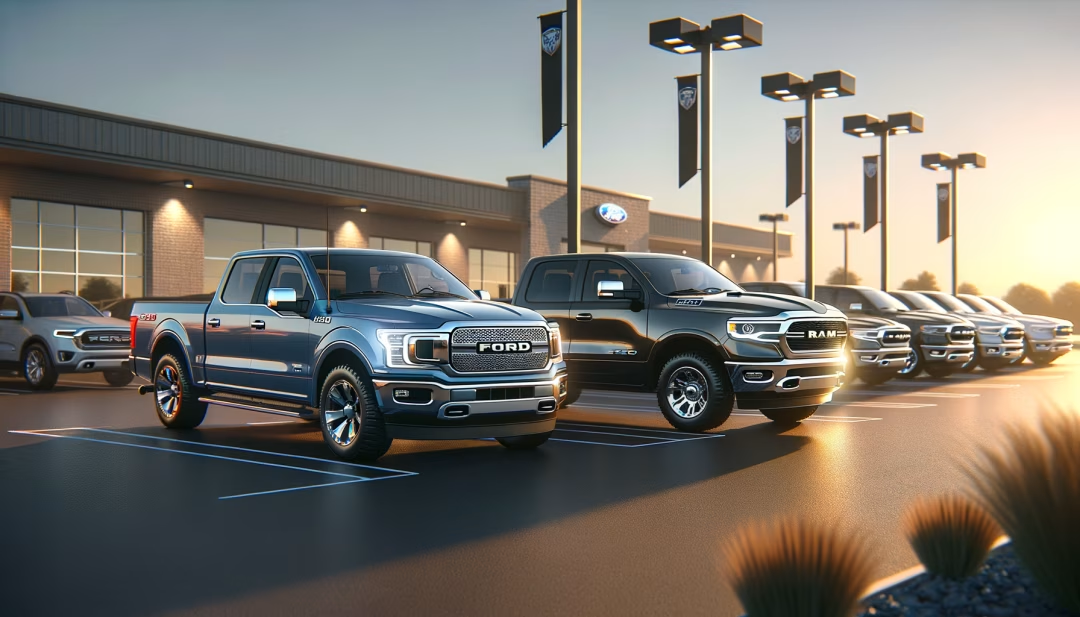
Used Ford F-150 vs Used Ram 1500: Detailed Buyer Guide
Target keywords to help your search include used Ford F-150 vs Ram 1500, Ford F-150 used, Ram 1500 used, best used trucks, used trucks for towing, and used truck comparison. Use the breakdown below to zero in on the truck that fits your budget, payload needs, passengers, and parking situation.
Quick Take
- Ford F-150: best breadth of engines and tow ratings in many years, strong resale, aluminum body panels resist rust
- Ram 1500: class leading ride quality, quiet cabin, user friendly Uconnect, refined interiors at similar price points
- Choose F-150 if you prioritize max towing and payload, choose Ram 1500 if you want the smoothest ride and upscale comfort
Powertrains, Towing, and Payload
Ford F-150 offers multiple proven engines. The 2.7L EcoBoost balances torque and fuel economy for commuters. The 3.5L EcoBoost is a towing star with strong low end pull, especially when paired with the Max Tow package. The 5.0L V8 provides traditional V8 character and simpler turbo free ownership. For heavy towing, properly equipped F-150 models often post the segment’s highest ratings for certain years.
Ram 1500 shines with the 5.7L Hemi V8, known for strong torque and a bold sound. The 3.6L Pentastar V6 with eTorque mild hybrid is suitable for light duty use and daily driving. Ram’s towing is highly competitive and more than enough for many buyers. If you frequently tow at or near the limit or across steep grades, an F-150 3.5L EcoBoost Max Tow may edge out similar Ram setups. If you tow moderate loads and want a plush ride, the Ram 1500 remains very compelling.
Ride, Handling, and Noise
The Ram 1500 is widely praised for its rear coil spring setup and available air suspension. The result is a smoother ride on broken pavement and reduced hop over bumps. Wind and road noise are impressively hushed on many trims. The F-150 has a more traditional ride that is still comfortable, with excellent steering feel in many years. If your daily route includes rough roads, the Ram may feel more composed. If you value confident steering and a slightly more connected feel, the F-150 is a great match.
Cab, Bed, and Interior Tech
Both trucks offer Regular, extended, and full four door cabs with multiple bed lengths. Ford’s SuperCrew and Ram’s Crew Cab provide generous rear legroom and family friendly access. Ford Sync and Ram Uconnect have improved steadily. Uconnect is often praised for its menus and quick responses, while newer Sync versions bring strong smartphone integration. Look for Apple CarPlay, Android Auto, advanced driver assistance, and 360 cameras in later model years.
Trim levels matter. Ford XL and Ram Tradesman keep costs down for work duty. Ford XLT and Ram Big Horn add popular features. Ford Lariat and Ram Laramie push into premium territory with leather, heated and ventilated seats, and advanced tech. Ford King Ranch, Platinum, and Limited, plus Ram Longhorn and Limited, deliver luxury features that rival premium SUVs.
Fuel Economy
Expect similar real world fuel economy for comparable V6 and V8 trims when driven in mixed conditions. The Ford 2.7L EcoBoost can return impressive mpg for a full size truck when not heavily loaded. Ram’s eTorque mild hybrid systems improve stop and go efficiency and smoothness. Driving style, gear ratios, bed covers, and tire choices can swing mpg results more than the brand badge.
Reliability and Known Issues to Check
On any used truck, service history and a thorough inspection matter more than brand loyalty. Still, it helps to know common watch items.
- Ford F-150: on certain years, listen for timing chain rattle on cold starts with early EcoBoosts, inspect intercooler condensation TSBs on older models, check for cam phaser noise on some 5.0L and 3.5L years, and verify that aluminum body panel repairs were done correctly after any accident
- Ram 1500: on some 5.7L Hemi trucks, ask about lifter tick or cam wear, verify coil spring or air suspension condition and operation, and inspect for prior towing strain like hitch deformation or heat discoloration on brakes
Bring any candidate to a trusted technician, use a full history report, and compare similar trucks in our used inventory and sold inventory to gauge value and typical equipment.
Best Used Years and Trims to Target
While great trucks exist across many years, shoppers often favor these eras for value and features. For the Ford F-150, 2015 introduced widespread aluminum body panels that resist rust and reduce weight. Many buyers like 2018 to 2020 F-150 models for updated tech and strong powertrains, while 2021 onward adds newer safety and infotainment. For the Ram 1500, 2019 marked a major redesign with an upgraded chassis, sophisticated interiors, and a quieter ride. The 2017 to 2018 Ram 1500 Classic can deliver excellent value if you prefer the proven prior generation.
Trim and engine picks vary by use. For daily commute and light towing, an F-150 2.7L EcoBoost XLT or a Ram 1500 Big Horn 3.6L eTorque offers a strong balance of comfort and economy. For frequent towing, look for an F-150 3.5L EcoBoost with Max Tow or a Ram 1500 5.7L Hemi with the right gears and cooling. For premium comfort, Ford Lariat and Platinum or Ram Laramie, Longhorn, and Limited often include advanced safety, leather, and upgraded audio.
Pricing, Resale, and Total Value
F-150 models often command slightly higher resale values due to brand demand and broad configurations. Ram 1500 can offer more features at a given price point, especially in comfort and interior materials. Use our market tools to compare active listings, recently sold examples, and financing options so you know where a specific truck sits in the local market. For pricing reference, explore ford-f150-used-market-value and used-truck price trends on our blog.
- Browse current selection: used-inventory
- Review recent sales for context: sold-inventory
- Learn about pricing drivers: used-car-price-trends
Work, Family, and Off Road Use
If your truck doubles as a family hauler, focus on Crew Cab or SuperCrew models with driver assistance, heated seats, and a quiet cabin. The Ram 1500 will feel exceptionally plush in this role. If your build list includes bed utility like a tailgate step, integrated tie downs, or Pro Power Onboard generators on newer F-150 models, Ford can be the more versatile tool for job sites. Off road explorers will want to target Ford FX4 or Raptor packages or the Ram Rebel and Off Road Group for upgraded shocks, skid plates, and all terrain tires.
Financing, Trade In, and Ownership Planning
Plan the numbers before you test drive. Prequalify to understand your budget range, bring your trade details, and consider protection options if you keep vehicles long term. We provide flexible payment paths and tools to estimate monthly costs and trade value so you can focus on finding the right truck, not just the right rate.
- Get payment insights: payment-options
- Start an application: applications
- Check trade value: value-my-trade
Test Drive and Inspection Checklist
Use this quick checklist to compare trucks back to back. If you need a deeper dive, see our research library and used car buying checklists for step by step help.
- Cold start listen and idle smoothness, check for ticks, rattles, or smoke
- Transmission shifts under light and heavy throttle, no slips or harsh bangs
- Brake feel and straight tracking during hard stops
- Suspension stability on bumps, no clunks, consistent damping
- 4x4 engagement, low range operation, and locker function if equipped
- Towing package verification, hitch condition, integrated brake controller
- Electronics, cameras, driver aids, CarPlay or Android Auto connectivity
- Book your visit: schedule-a-test-drive
- Prep with our checklist: used-car-buying-checklist
Towing and Hauling Resources
If towing is the deciding factor, compare your real trailer weight and tongue weight to the exact door sticker on any truck. Two similar trucks can vary because of gears, tow packages, and options. These resources will help you plan with confidence.
- Truck picks for heavy pulling: best-used-vehicles-for-towing
- Work ready truck ideas: best-used-trucks-for-work
Service, Warranty, and Long Term Care
A well maintained used truck can serve for hundreds of thousands of miles. Make a plan for routine service and consider coverage that matches how long you will keep the vehicle and how far you drive annually.
- Schedule maintenance: schedule-service
- Warranty basics: used-car-warranty-guide
- Extended protection: extended-warranty-for-used-cars
Who Should Pick Which
Pick a used Ford F-150 if you need frequent heavy towing, want the widest engine menu, or prefer aluminum body rust resistance. Choose an XLT or Lariat with the right tow package for a strong blend of value and capability. Pick a used Ram 1500 if ride comfort, interior quiet, and an upscale cabin sway your daily satisfaction. Choose a Big Horn or Laramie for excellent features per dollar or a Limited for luxury levels of refinement. Both trucks can excel when matched to the right trim and equipment.
Helpful Links
- Browse inventory: used-inventory
- Compare best used trucks: best-used-trucks
- Research hub: research-page-template
- Market insights: blog
- Locations and hours: locations
- Contact our team: contact-us
Ford F-150 vs Ram 1500 Used FAQs
Explore More
- Truck research hub: best-used-trucks
- More comparisons: chevy-silverado-vs-ford-f150-used
- Ownership tips: how-to-buy-a-used-car
