

F-150 Used Comparison Guide
Shopping full-size trucks and comparing a used Chevy Silverado vs Ford F-150 comes down to capability, comfort, and long-term value. Both trucks are proven leaders with broad trim lines, strong towing potential, and parts availability that helps keep ownership costs in check. This guide breaks down key differences in performance, reliability, features, and price so you can quickly narrow your shortlist.
Below, you will find year and engine tips to target, common issues to inspect, fuel economy ranges, and real-world considerations like bed and cab choices. You can also explore helpful links to research trims, estimate ownership costs, and find options that fit your budget in used inventory. Whether you prioritize weekend towing, daily commuting, or jobsite durability, you will find clear comparisons to help pick the right pre-owned Silverado or F-150.
If you are early in your research, use this page as a dependable starting point for side-by-side insights on used Chevy Silverado and Ford F-150 models. You will see guidance on engines, tow ratings, tech features to look for, and maintenance considerations. When you are ready for next steps, related resources and model deep dives are included below for easy reference.
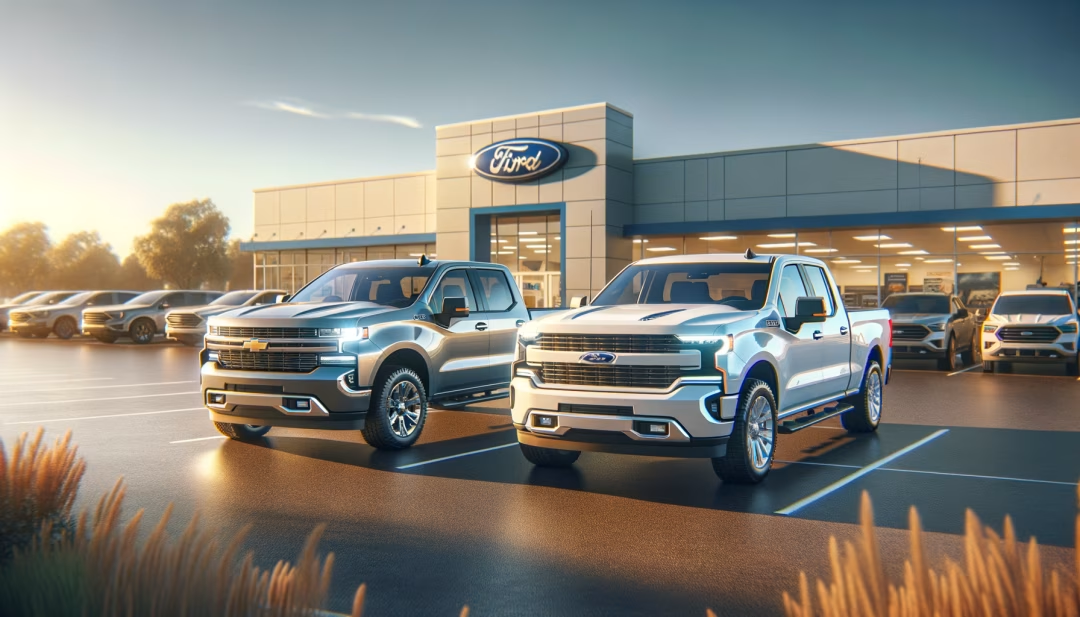
Used Chevy Silverado vs Ford F-150 overview
The Silverado and F-150 are the best-known full-size pickups for a reason. Both offer multiple cab sizes and bed lengths, a range of gas and diesel engines depending on the year, and trims that span basic work trucks to premium luxury cruisers. On the used market, that breadth means you can match a truck to a very specific need and price point. It also means comparison shopping is crucial, because options and capabilities vary widely by year, engine, axle ratio, and package.
Typical used half-ton tow ratings range from roughly 7,000 pounds to more than 12,000 pounds depending on configuration. Payload often spans about 1,500 to 2,300 pounds, again based on options. If towing and payload are priorities, verify the door jamb stickers, axle ratio, hitch class, and whether a factory tow package is included for either model. For light-duty daily use, focus on condition, maintenance records, fuel economy, and driver assistance features that became more common in late-2010s models.
Price, value, and depreciation
Across similar years and mileage, used Silverado and F-150 prices are often close, with local demand, trim, and engine choice creating the largest swings. Historically, F-150 resale strength is excellent, and Silverado values are competitive in most regions. To align price to features, compare several locally available examples and note how equipment impacts value. Reviewing sold vehicles can help you understand real-world market trends.
- Browse market examples in used inventory: used-inventory
- See recent comparable sales: sold-inventory
- Research price trends and ownership costs: used-car-price-trends, used-car-ownership-cost-analysis
Engines and years to consider
Engine technology advanced significantly in the mid to late 2010s. Turbocharged six-cylinder F-150 engines deliver strong torque and decent fuel economy, while Silverado V8s are known for smooth power and durability. Diesel options appear in select years for both models. Your best pick depends on your balance of towing needs, simplicity, and efficiency.
- Dive deeper into model-year advice: best-used-ford-f150-years and best-used-chevy-silverado-years
- If you prefer more general brand reliability trends: most-reliable-used-trucks
Towing, payload, and configuration choices
Both trucks can be excellent towers when properly equipped. Tow ratings and payload are highly sensitive to axle ratio, engine, cab style, 4x2 vs 4x4, and factory towing packages. If you plan to tow a camper, boat, or work trailer, confirm the specific vehicle’s ratings and ensure the hitch, wiring, cooling, and brake controller match your needs.
- Explore towing-focused picks: best-used-vehicles-for-towing and best-used-trucks-for-towing-campers
Cab and bed pairing matters. Regular cabs with long beds maximize payload and bed utility, extended and crew cabs improve passenger comfort, and short beds ease parking. Silverado and F-150 both offer multiple box sizes across years, so check that the configuration suits your work tools or family gear.
Fuel economy and daily drivability
Half-ton pickups will not match compact crossovers for efficiency, but later-model engines improved significantly. In general, turbocharged six-cylinder F-150 trims can deliver competitive city and highway mileage, while Silverado V8s balance smooth power with acceptable consumption when driven moderately. Tires, lift kits, tonneau covers, and bed racks all affect economy. If minimizing fuel spend is critical, compare EPA ratings for your target years and trims and review real owner reports.
- See additional fuel-sipping options: used-trucks-with-best-fuel-economy
Comfort, technology, and safety features
As both models evolved, cabins became quieter, seats improved, and infotainment systems gained smartphone integration. By the late 2010s, you will commonly find Apple CarPlay, Android Auto, larger touchscreens, and advanced driver assistance in popular trims. Safety tech like blind spot monitoring, rear cross traffic alert, adaptive cruise control, and lane keeping can significantly reduce fatigue on long drives or in traffic.
- If you prioritize modern features, scan these roundups: used-cars-with-best-infotainment-systems, used-cars-with-apple-carplay-and-android-auto, used-cars-with-best-driver-assistance
Reliability, maintenance, and ownership costs
Both trucks have strong reputations for durability, especially when serviced on schedule. Reliability varies by engine and year, so review maintenance records and examine common wear items. Pay attention to transmission service history, brake and tire condition, evidence of heavy towing, and any aftermarket modifications. Rust-prone regions call for extra underbody and frame inspection. For electrical and infotainment issues, test every switch, camera, and sensor.
- Research reliability and costs: most-reliable-used-trucks, used-cars-with-lowest-maintenance-costs, used-cars-with-lowest-cost-of-ownership
Inspection checklist and buying tips
Arrive prepared with a plan. Many issues can be identified during a careful driveway check before you invest in a third-party inspection. Verify cold start behavior, listen for lifter tick or turbo whine, confirm 4x4 engagement, and check for uneven tire wear that can indicate alignment or suspension problems. Inspect the bed and hitch area for signs of heavy use. Confirm service intervals, recall completion, and the status of any remaining factory or extended coverage.
Which truck is right for you
The Silverado and F-150 both excel, but certain buyer profiles tend to prefer one over the other based on feel, feature availability, or powertrain preferences. Use the examples below to align with your priorities.
- You want strong tow-friendly torque with modern driver aids - consider well-equipped turbo V6 F-150 trims with tow packages and advanced safety suites.
- You prefer a traditional V8 feel with smooth power delivery - many Silverado V8 trims fit, especially those with maintenance records and appropriate axle ratios.
- You prioritize cabin quietness and premium touches - evaluate upper trims of both trucks, comparing seat comfort, materials, and infotainment responsiveness in person.
- Budget-focused shopper - compare mid-trim, fleet-maintained units with moderate mileage. Cross-shop feature sets rather than just price.
- Off-road weekends - look for factory off-road packages, skid plates, all-terrain tires, and locking rear differentials where available.
Financing, trade-in, and location considerations
Total cost of ownership includes financing, insurance, fuel, maintenance, and taxes. Pre-qualification and trade-in estimates can help you target the right model and trim. Regional inventory and pricing vary, so checking multiple nearby locations can improve selection and value.
- Review options and terms: payment-options, applications
- Estimate your current vehicle’s value: value-my-trade
- See nearby inventory access: locations
Quick comparison highlights
- Capability - both can tow and haul well when properly equipped. Verify the exact truck’s tow stickers, hitch class, and axle ratio.
- Engines - F-150 turbo V6 options blend torque and efficiency. Silverado V8s deliver smooth, predictable power and a traditional feel.
- Comfort and tech - late-2010s and newer trims from both brands add CarPlay, Android Auto, and helpful driver aids.
- Value - prices vary by trim, engine, and condition. Compare multiple examples and review recent sales to gauge fair market value.
Helpful related resources
- Explore more trucks: best-used-trucks, best-used-trucks-under-20000
- Tow and adventure guides: best-used-vehicles-for-outdoor-adventures, best-used-trucks-for-work
- Research hub and blog: research-page-template, blog
- General info: about-us, contact-us, privacy-policy, terms, visitor-agreement
