

Smart Picks To Lower Everyday Driving Costs
If you want the most value from your next ride, focus on cost per mile. Our guide to used cars with lowest cost per mile explains how to estimate real ownership costs so you can pick a vehicle that saves on every drive. We break down the math for fuel, maintenance, insurance, tires, taxes, fees, and expected depreciation, then show how to compare models with simple, transparent assumptions. You will find practical examples, segment highlights, and links to research resources that make the process easy.
Ready to narrow your search by numbers that matter. Start with efficient and reliable models, then use our step by step approach to confirm your estimate on a specific VIN. Explore segments, review long term reliability, and see how financing terms can change cost per mile. When you are ready to look at options, see our used inventory and research pages for deeper insights.
This page is designed to help you buy confidently by focusing on total operating costs per mile. Use the methods below to compare vehicles side by side, then apply the same math to any car you are considering. You can also review our related guides on fuel economy, reliability, financing, and trade in value to fine tune your estimate and align the numbers with your budget.
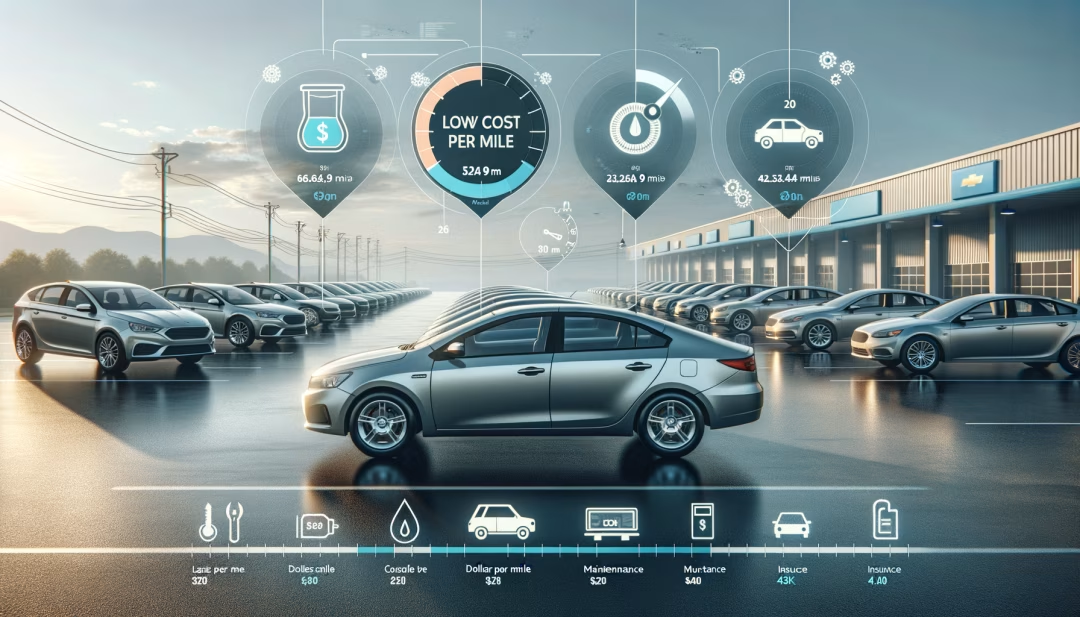
What cost per mile means and why it matters
Cost per mile is a simple way to compare used cars by what they actually cost to drive. Instead of focusing only on sticker price or monthly payment, you divide the total cost of ownership by the miles you expect to drive. This reveals the true efficiency of your choice. A car with a slightly higher price can still be the least expensive per mile if it uses less fuel, has low repair frequency, and holds value well.
How to calculate cost per mile
- Start with purchase costs: price, taxes, title, registration, and any documentation fees.
- Estimate fuel: annual miles divided by average mpg, multiplied by your local fuel price.
- Add maintenance and repairs: use brand and model reliability data, and include tires, oil, brakes, and fluids.
- Include insurance: get quotes based on your profile and the specific VIN when possible.
- Account for depreciation: expected value drop over your ownership period minus your potential resale or trade in value.
- If financing, include interest paid over the term and any loan fees.
Add those items together for your ownership period. Then divide by the total miles you plan to drive in that period. The result is your estimated cost per mile.
Sample cost per mile estimate
Assumptions: you drive 12,000 miles per year for 4 years, total 48,000 miles. You buy a reliable compact sedan rated at 34 mpg combined. Fuel price is 3.60 per gallon.
- Purchase and fees: 14,500 price plus 1,250 taxes and fees equals 15,750.
- Fuel: 48,000 miles divided by 34 mpg equals 1,412 gallons. Times 3.60 equals 5,083.
- Maintenance and repairs: 1,600 over 4 years based on the model and mileage plan.
- Insurance: 1,150 per year equals 4,600 for 4 years.
- Depreciation offset: expected resale or trade value of 9,800 after 4 years. Depreciation is 15,750 minus 9,800 equals 5,950.
Total ownership cost: fuel 5,083 plus maintenance 1,600 plus insurance 4,600 plus depreciation 5,950 equals 17,233. Cost per mile: 17,233 divided by 48,000 equals 0.36 per mile. Compare multiple vehicles with the same method to see which one wins.
Vehicle types that often deliver the lowest cost per mile
Actual results depend on local prices and specific condition. The categories below tend to perform well in cost per mile comparisons when well maintained and reasonably priced.
- Compact and subcompact sedans: strong fuel economy, lower purchase price, affordable tires and brakes. See best used compact cars on best-used-compact-cars and top commuter picks on best-used-commuter-cars.
- Hybrids with proven reliability: low fuel cost and long life when serviced on time. Compare options on best-used-hybrid-cars and used-cars-with-high-mpg.
- Midsize sedans from reliable brands: slightly higher price but excellent longevity and reasonable insurance. See most-reliable-used-cars and best-used-sedans.
- Compact crossovers with simple drivetrains: pick models with strong reliability records to keep repairs and depreciation in check. Explore best-used-crossover-suvs and used-cars-with-lowest-total-cost-of-ownership.
- Older but durable models with service records: low purchase price plus proven longevity can beat newer options on a per mile basis. See used-cars-that-last-over-200000-miles and used-cars-with-longest-lifespan.
How to compare two used cars side by side
Use the same inputs for both vehicles so the math is apples to apples. Confirm mpg from EPA sources, use the same annual miles, use identical fuel prices, and collect insurance quotes for each VIN. For maintenance, check the service history and have a pre purchase inspection performed. For depreciation, review current retail prices for similar age and mileage, then apply a conservative future value. Finally, plug in your actual financing offer to see interest cost. Recalculate if your annual miles vary.
Practical tips to lower cost per mile
- Buy the condition, not just the model. A well serviced car often beats a higher ranked model with spotty records. Use used-car-inspection-checklist before you decide and schedule service at schedule-service after purchase to stay on track.
- Right size your engine and features. Extra power, premium tires, and high trim brakes can raise running costs without helping your daily needs. See best-used-cars-for-commuters and best-used-cars-with-good-gas-mileage for ideas.
- Use low rolling resistance tires and maintain proper pressure. Tire choice can change fuel cost and brake life.
- Keep up with fluids, filters, and minor repairs. Preventive maintenance avoids expensive failures and downtime. Explore used-cars-with-lowest-maintenance-costs for models that help here.
- Insure smart. Ask about discounts for safe driving apps, defensive driving courses, and mileage based plans. Use used-cars-with-lowest-insurance-rates to set expectations.
Financing and cost per mile
Your loan structure directly affects cost per mile through interest paid. A lower rate or shorter term can reduce total cost even if the payment is similar. If you plan to resell in a few years, avoid terms that outlast your ownership period. Compare options on payment-options and applications, then read how-to-finance-a-used-car and used-car-loan-interest-rates to understand the tradeoffs. If credit is a concern, learn how-to-get-approved-for-a-used-car-loan and can-you-finance-a-used-car-with-bad-credit for steps that can reduce interest costs.
When a hybrid or electric makes sense
Hybrids often deliver very low fuel cost per mile and can be excellent if battery health is verified and maintenance is up to date. Look for consistent service history and consider a pre purchase battery scan when possible. Read best-used-hybrid-cars and best-used-electric-vehicles for model ideas and used-cars-with-high-mpg for efficiency benchmarks. Be sure to include home charging costs or local electricity prices in your estimate for electric vehicles. Also review used-cars-with-lowest-total-operating-cost to consider the whole picture.
How mileage and age impact cost per mile
A higher mileage car with solid records can be a better per mile value than a low mileage car with uncertain history. What matters is remaining useful life relative to your planned miles. Look for timing belt or chain service, transmission fluid changes, brake and suspension work, and cooling system care. Confirm that common issues for the model have been addressed. Use most-reliable-used-cars and used-cars-known-for-durability to guide your shortlist.
Research links to help you decide
Checklist for a low cost per mile purchase
- Pull a complete history report and confirm maintenance intervals are met.
- Complete a pre purchase inspection and request written findings and estimates.
- Get an insurance quote by VIN and your intended annual miles.
- Price future maintenance items like tires and brakes using current local rates.
- Estimate resale or trade value at your target exit mileage using current market data.
- Used car buying checklist
Understanding the trade off between price and longevity
A very low price can look great until you add likely repairs and a short remaining lifespan. On the other hand, paying a bit more for a well kept car with proof of service can mean fewer surprises and a lower cost per mile over time. Favor cars with one or two owners, consistent oil change intervals, cooling system service, transmission fluid changes where applicable, and brake fluid replacement. For models with timing belts, confirm belt, tensioner, and water pump service. This due diligence often saves multiples of its cost.
Common pitfalls that raise cost per mile
- Underestimating fuel use by using highway mpg instead of combined mpg for mixed driving.
- Skipping expected wear items like tires, brakes, battery, and spark plugs in the budget.
- Ignoring insurance variation between models and trims. Safety equipment and repair costs change premiums.
- Assuming resale value without checking today’s market for similar age and mileage.
Warranty choices and repair risk
If you want to cap unexpected expenses, consider a reputable service contract that covers major components after factory coverage expires. Read used-car-warranty-guide and extended-warranty-for-used-cars to understand coverage, exclusions, and deductibles. A service contract can smooth cash flow, but it should be priced into your cost per mile estimate to see if it is a net savings for your case.
Local support and service planning
A low cost per mile plan works best with consistent service. Use locations to find a nearby store and schedule-service to keep your car maintained on time. Check research-page-template for more model guides, and meet-our-staff to learn about the team that supports you during and after the sale.
Frequently asked questions about cost per mile
Legal and methodology notes
All examples are estimates for illustration. Your results will vary based on market prices, condition, trim, options, local taxes, driving style, weather, and maintenance quality. Always verify numbers for the specific vehicle you are considering and update fuel and insurance inputs with current quotes. Review visitor-agreement, privacy-policy, and terms for site details. To connect with our team, see contact-us, about-us, and meet-our-staff.
