

Civic Used Comparison Guide
Shopping for a compact car and deciding between a used Toyota Corolla and a used Honda Civic. This side by side guide compares reliability, fuel economy, features, safety, and ownership costs to help you feel confident before you browse vehicles. We cover popular model years, key trims, common engines, and what to expect on test drives. You will also find insights on maintenance, resale value, and which years deliver the best mix of price and equipment. If you want a commuter friendly sedan with low running costs, both Corolla and Civic are strong choices. The difference often comes down to your priorities. Corolla leans toward long term durability and straightforward value. Civic leans toward sportier dynamics and a more premium interior feel in many trims. Use this guide to narrow your short list before exploring our used inventory and research resources.
The Corolla and Civic have a long track record for reliability, safety, and efficient commuting. Corolla focuses on low maintenance ownership and simple controls. Civic focuses on responsive handling and upscale cabin design. Both offer strong fuel economy, modern driver aids on newer years, and excellent resale value. Continue below for best years, trim advice, and cost comparisons.
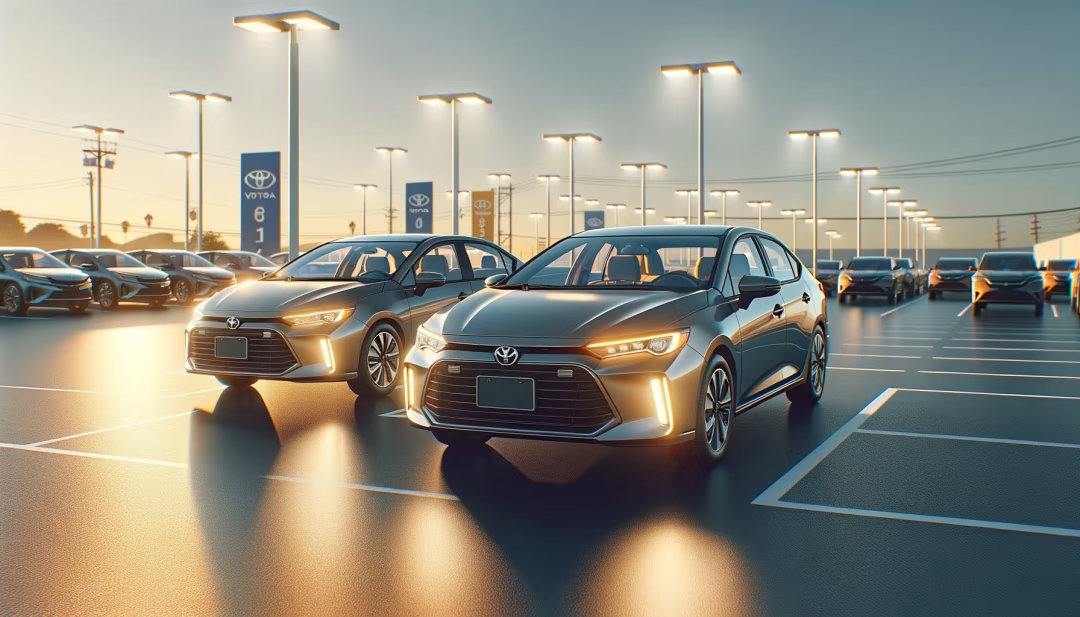
At a Glance: Used Toyota Corolla vs Used Honda Civic
The compact car segment is led by two heavy hitters that dominate used car wish lists. The Toyota Corolla is known for simple ownership, excellent reliability, and predictable running costs. The Honda Civic is known for fun to drive dynamics, refined interiors, and strong performance even in base engines. On the used market, both deliver exceptional value, but their personalities differ. Drivers who want a set it and forget it commuter often lean Corolla. Shoppers who enjoy a more engaging drive and richer cabin materials often pick Civic.
Key Differences You Will Notice
- Driving feel: Corolla favors comfort and predictability. Civic feels more athletic with sharper steering.
- Engines: Corolla commonly features a 1.8L or 2.0L non turbo. Civic offers a 2.0L non turbo or a 1.5L turbo that balances power and efficiency.
- Interior: Corolla is straightforward and user friendly. Civic trends more upscale with larger screens and premium touches in higher trims.
- Cost of ownership: Both are affordable to maintain. Corolla parts and service are typically a touch less expensive on average.
Performance and Fuel Economy
For daily commuting, either car will deliver strong mileage and smooth performance. Many recent Corolla models with the 2.0L engine post real world combined economy in the low to mid 30s, with highway figures that can approach the high 30s. The Civic 1.5L turbo is one of the segment standouts, often matching or exceeding mid 30s combined mpg when driven gently. The Civic’s chassis tuning also makes highway merges and lane changes feel more confident. If you want the most efficient setup with a sportier punch, the Civic 1.5L turbo is compelling. If you prefer naturally aspirated simplicity without a turbo, the Corolla 2.0L is a smart pick.
Ride Quality and Cabin Comfort
Corolla prioritizes a quiet, comfortable ride with controls placed intuitively and a learning curve that is nearly flat. Civic delivers a slightly firmer but composed ride that translates to more confident cornering. In terms of noise, recent generations of both models are impressively quiet for the class, though tire choice and wheel size can influence cabin sound. Seating comfort is strong in both, but taller drivers often appreciate the Civic’s seat travel and slightly roomier feel. Families appreciate both for easy to clean materials and sensible storage.
Interior Tech and Infotainment
Technology varies by year and trim. Newer Corollas and Civics offer Apple CarPlay and Android Auto on many trims. Corolla’s interface is simple and reliable, with quick menus and easy Bluetooth pairing. Civic infotainment has improved over the years, moving from touch heavy controls to more balanced layouts with physical buttons returning in later models. If wireless smartphone integration and larger touchscreens matter, check specific years and trims during your search. You can browse related model recommendations on best used tech features by visiting best-used-cars-with-apple-carplay or best-used-cars-with-android-auto.
Safety and Driver Assistance
Safety is a strong point for both vehicles. Toyota Safety Sense on many Corolla years includes features like automatic emergency braking, lane departure alert, and adaptive cruise on select trims. Honda Sensing on many Civic years includes similar driver aids. Crash test scores are generally excellent for recent generations. If advanced safety is a priority, verify the presence and functionality of these systems on the specific vehicle. For broader safety focused shopping, see used-cars-with-best-safety-ratings and safest-used-cars.
Reliability, Repairs, and Maintenance
Both models are frequently cited for long term dependability. Toyota has a reputation for durable non turbo engines and straightforward maintenance intervals. Honda’s 1.5L turbo is efficient and strong, but it is wise to check service history and perform a thorough pre purchase inspection. Routine items like oil changes, filters, tires, and brake pads are affordable on both cars. Toyotas can have slightly lower parts pricing on average, but differences are small. To understand ownership expectations across brands, explore most-reliable-used-toyota-models and most-reliable-used-honda-models.
Resale Value and Cost to Own
Corolla and Civic both hold value better than most compact competitors. Civic often commands a premium for its driving dynamics and interior appeal. Corolla commands a premium for rock solid durability and low lifetime costs. Insurance rates, registration fees, and local market supply can shift total ownership costs, but most shoppers find both cars remain budget friendly for years. For more insights, see used-cars-with-best-resale-value and used-cars-with-lowest-cost-of-ownership.
Best Used Years and Trims to Consider
Choosing the right year and trim ensures you get the features you want at the right price. Here are popular picks many shoppers target for value, tech, and dependability.
Toyota Corolla: Smart Used Picks
- 2017 to 2019: Value focused, many with Toyota Safety Sense and dependable 1.8L engines.
- 2020 to 2022: Newer platform, available 2.0L engine, improved infotainment, modern driver aids.
- LE: Great value, common on the market, often includes smartphone integration in newer years.
- SE: Sporty look, larger wheels, firmer suspension, still efficient.
Honda Civic: Smart Used Picks
- 2017 to 2019: Strong mix of value and features, 1.5L turbo or 2.0L non turbo options.
- 2020 to 2022: Interior and tech refinements, standard safety on many trims, excellent mpg.
- LX and Sport: Budget friendly, solid equipment, Sport adds a touch of style and tuning.
- EX and EX L: More features, sunroof on many, stronger infotainment and driver aids.
Which One Fits Your Daily Routine
- Mostly city driving and easy maintenance: Corolla LE or SE from 2020 to 2022 offers modern safety and excellent mpg.
- Highway commuting and a livelier feel: Civic EX or Sport with the 1.5L turbo balances responsiveness with efficiency.
- Long term ownership and low repair risk: Corolla is a classic pick with simple, durable powertrains.
- Tech forward cabin and premium vibe: Civic trims often feel a class above with strong ergonomics.
Inspection Tips for Either Model
A careful walkthrough is the best way to confirm condition on any used car. Look for consistent panel gaps, even tire wear, complete service records, and smooth shifting from the transmission. On Civic 1.5L turbo models, confirm maintenance intervals were followed and that the engine idles smoothly when warm. On Corolla, listen for suspension noises on test drives and verify driver assistance features activate as intended. For a deeper dive, use our resources at used-car-buying-checklist, used-car-inspection-checklist, and how-to-check-used-car-history.
Budget Planning and Financing
Compact sedans often provide lower monthly payments and predictable costs. Review loan rates and down payment goals before you shop. Many buyers also consider total cost of ownership which includes insurance, maintenance, fuel, and registration. Explore financing education and tools at used-car-loan-interest-rates, how-to-finance-a-used-car, applications, and payment-options. If you plan to sell or trade a current vehicle, visit value-my-trade to estimate equity.
Related Comparisons and Research
If you are still weighing options, compare other top rivals and size classes. For example, see toyota-camry-vs-honda-accord-used for midsize sedans or toyota-rav4-vs-honda-crv-used if you want a compact SUV. You can also browse best-used-compact-cars and best-used-sedans for curated picks by budget and use case. For broader market education, visit research-page-template and blog.
Inventory and Next Steps
After refining your shortlist, check availability in used-inventory. You can review recently sold examples at sold-inventory to understand pricing trends in our area. When you are ready to experience specific models, schedule-a-test-drive helps you plan a visit that fits your day. If you have questions, visit contact-us or meet-our-staff to learn more about our team. Our locations page shows where to find us, and schedule-service is available for maintenance after purchase.
Helpful Resources on Our Site
Toyota Corolla vs Honda Civic Used FAQs
For additional information on shopping best practices, visit how-to-buy-a-used-car, used-car-buying-checklist, and how-to-negotiate-a-used-car-price. To understand policies, view privacy-policy, terms, and visitor-agreement. Learn about our team at about-us and meet-our-staff.
