

Car: Expert Guide to Decide With Confidence
Deciding whether to buy or finance a used car depends on your budget, timeline, and long term goals. Paying cash can eliminate interest and simplify ownership. Financing can protect savings, build credit history, and make a higher quality vehicle more attainable with manageable monthly payments. This page explains how to evaluate total cost, risk, and flexibility so you can choose the path that fits your life.
You will find clear comparisons, real world examples, and tools to help you compare scenarios with different down payments, interest rates, and loan terms. Explore models and pricing in used-inventory, learn about payment structures in payment-options, estimate trade equity in value-my-trade, and plan an in person drive through schedule-a-test-drive. Use this guide to understand the pros and cons of buying versus financing a used car before you choose your next vehicle.
If you want the lowest lifetime cost and have the funds, buying can be a smart move. If you want to preserve cash, build credit, or step into a newer or better equipped model, financing can be the better fit. Compare interest rates, down payment options, and ownership timelines below. For deeper topics, visit how-to-buy-a-used-car and how-to-finance-a-used-car.
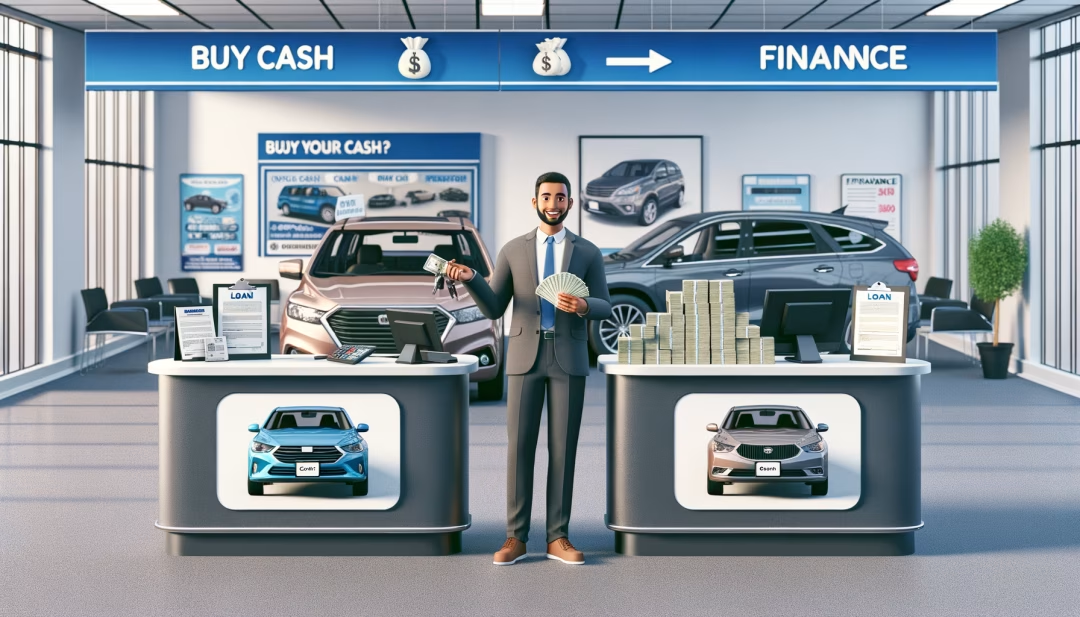
Buy vs Finance a Used Car: What Each Path Really Means
Buying a used car with cash means you pay the full price at purchase, plus tax, title, and registration. You own the vehicle outright on day one, avoid finance charges, and have no monthly payment. Financing a used car means you borrow a portion of the purchase price and repay it over time with interest and fees. You gain immediate access to the vehicle while keeping more of your savings intact. The best choice depends on how long you plan to keep the car, your emergency fund, your credit profile, and your alternative uses for cash.
Pros of Buying a Used Car With Cash
- No interest charges or lender fees, which can save thousands over time
- Lower insurance needs in some cases because gap coverage is often optional without a loan. See used-car-gap-insurance-explained
- Clear title from day one and maximum flexibility to sell or trade whenever you choose
- Simpler transaction with fewer documents and faster checkout
Pros of Financing a Used Car
- Preserves your emergency fund for repairs, medical bills, or opportunities that create returns
- Lets you select a newer, safer, or more reliable vehicle while keeping monthly costs manageable. See used-cars-with-best-crash-test-ratings
- Builds credit history with on time payments, which can improve future borrowing terms
- Potential to refinance later if rates fall. Learn more at how-to-refinance-a-used-car-loan
When Buying With Cash Makes Sense
Paying cash can be smart if the purchase will not drain your emergency fund and you plan to keep the car for years. Shorter ownership timelines also favor cash because interest has less time to amortize. If you are shopping budget friendly models, explore best-used-cars-under-10000, best-used-cars-under-15000, and best-used-cars-under-20000 to find options that fit a cash purchase without stretching savings.
When Financing Makes Sense
Financing may be the better route if preserving liquidity is important, if you want to upgrade to a model with stronger safety or reliability, or if building credit is a priority. Many shoppers also finance when a well priced vehicle appears, and waiting to save cash could risk missing the deal. If your credit is still a work in progress, review can-you-finance-a-used-car-with-bad-credit and what-credit-score-is-needed-to-finance-a-used-car for realistic approval guidance.
How to Compare Total Cost
A smart decision weighs the total cost of ownership over the time you expect to keep the vehicle. For a cash purchase, the main costs are the price, taxes and fees, maintenance, repairs, insurance, and the potential opportunity cost of using cash now. For financing, add interest charges, lender fees, and potential ancillary coverage such as service contracts or gap coverage. Rate and term drive the finance cost. See used-car-loan-interest-rates and how-much-down-payment-for-used-car to understand the impact on monthly budget and lifetime expense.
Example Snapshot
Assume a 20000 used car with 2000 in taxes and fees. With cash, your out the door cost is about 22000, plus running costs over time. With financing, a 10 percent down payment reduces the amount financed to 19800 if taxes and fees are financed, too. At a hypothetical 7.5 percent APR for 60 months, interest paid could exceed 4000 by payoff. A larger down payment, a shorter term, or a lower rate reduces that total finance charge. Use this lens to compare scenarios that match your budget.
Risk and Flexibility Considerations
- Job or income changes: financing keeps savings available for surprises
- Vehicle depreciation: models with strong resale hold value better. See used-cars-with-best-resale-value and used-cars-with-low-depreciation
- Reliability risk: research models known for durability at most-reliable-used-cars and used-cars-known-for-durability
Ways to Lower the Cost of Financing
- Improve credit before purchase by paying down balances and checking reports. Learn how rates respond at how-interest-rates-affect-used-car-loans
- Increase the down payment to reduce principal and interest
- Consider a shorter term to limit total interest paid, even if the payment is higher
- Use trade equity to replace part of the down payment. Estimate at value-my-trade
- Compare lender offers and structure options at payment-options
Vehicle Choice Matters
A smart car choice can outweigh small financing differences. Focus on safety, reliability, and operating cost. Browse expert picks for your lifestyle, including best-used-family-cars, best-used-commuter-cars, best-used-awd-vehicles, best-used-hybrid-cars, and best-used-trucks-for-work. If you prefer like new peace of mind, compare certified-pre-owned-vs-used. For warranty insights, visit used-car-warranty-guide.
Pre Purchase Due Diligence
- Review history reports. See how-to-check-used-car-history and used-car-vin-check-guide
- Inspect thoroughly or use a technician. Use used-car-inspection-checklist
- Test drive different routes and conditions. Book time via schedule-a-test-drive
- Understand pricing. Read how-dealers-price-used-cars and how-to-negotiate-a-used-car-price
Budget Building Blocks
Create a realistic budget that covers the payment, insurance, fuel, maintenance, and a repair reserve. Many drivers aim for a total car cost near 10 to 15 percent of take home pay. Add a buffer for seasonal expenses and registration renewals. Explore affordable options at best-used-cars-with-good-gas-mileage and ownership friendly picks at best-used-cars-with-low-maintenance-costs.
Special Situations
- First vehicle or student: see best-used-vehicles-for-first-time-buyers and best-used-cars-for-college-students
- Winter states: review best-used-vehicles-for-winter-driving and best-used-cars-for-snow
- Families: compare best-used-3-row-suvs and best-used-minivans
Step by Step Framework to Decide
- Define the monthly comfort zone and a separate emergency fund floor you will not cross
- Price short listed vehicles in used-inventory and note taxes and fees in your state
- Model cash versus finance scenarios with different down payments and terms. Use guidance from used-car-loan-interest-rates
- Add insurance, maintenance, and a repair reserve to each scenario to see the true monthly picture
- Choose the path that protects your savings and delivers the safety, reliability, and features you value most
Common Mistakes to Avoid
- Using your full savings for a cash purchase and leaving no reserve for repairs or life events
- Choosing a long loan term that hides the true cost with a low payment but high interest over time
- Skipping pre purchase inspection or history checks. See used-car-buying-checklist
- Ignoring total cost of ownership in favor of the lowest sticker price
Helpful Research and Next Steps
Continue your research with these resources and guides. You can browse models, learn financing basics, and understand ownership protections before you decide.
- Explore inventory: used-inventory and recent sales at sold-inventory
- Financing education: how-does-used-car-financing-work and applications
- Ownership protection: used-car-warranty-guide and used-car-gap-insurance-explained
- Visit us: locations and connect at contact-us
- Learn more on our blog: blog and brand background at about-us
Frequently Asked Questions
Legal and policy links: privacy-policy, terms, and visitor-agreement. Explore more research at research-page-template or connect through contact-us.
