

Compare Costs, MPG, Maintenance, and Value
Trying to decide between hybrid vs gas used cars for your next ride. This guide breaks down real world differences in fuel economy, ownership costs, reliability, and long term value so you can choose with confidence. Hybrids combine a gasoline engine with an electric motor to boost city mpg and reduce fuel spend, while traditional gas vehicles often cost less to buy and can be simpler to maintain. Your best pick depends on how far you drive, where you drive, and how long you plan to keep the vehicle. Below, we compare average mpg, battery life expectations, maintenance needs, performance tradeoffs, and resale value. You will also find links to shop inventory, compare models, and learn financing basics. Whether you commute daily in traffic or take weekend highway trips, this page will help you match your budget and lifestyle to the right used car.
Hybrids excel in stop and go city driving with strong mpg and quiet operation. Gas vehicles tend to have lower upfront prices, broad availability, and straightforward service needs. Use the comparisons and resources below to estimate total cost, evaluate reliability, and explore models that fit your commute, cargo needs, and budget range.
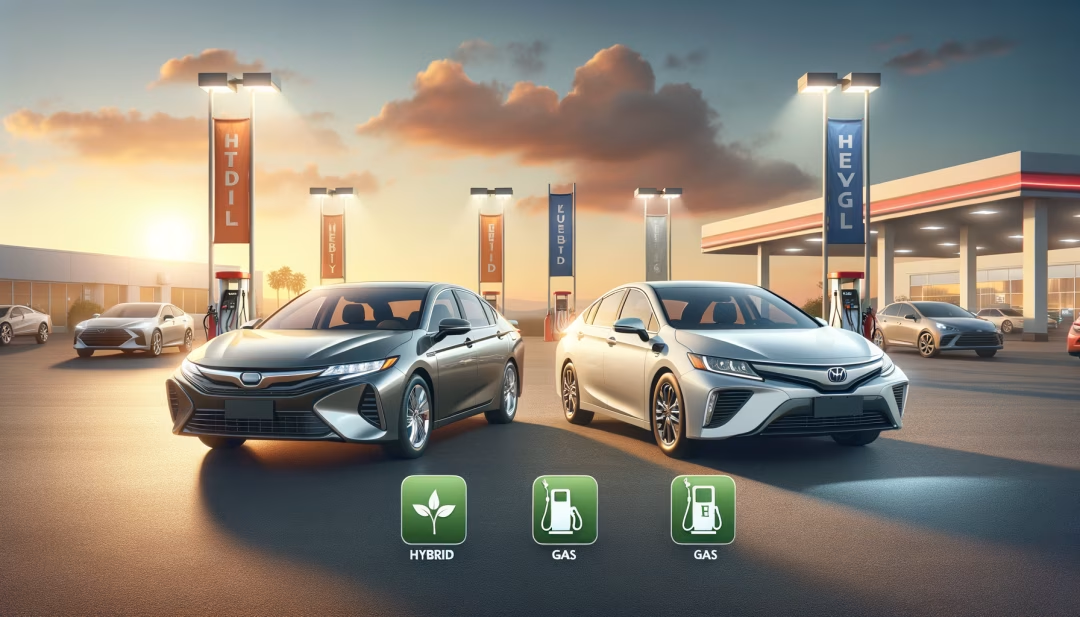
Hybrid vs Gas Used Cars: Key Takeaways
- Hybrids usually deliver much higher city mpg and lower fuel costs for urban commuters.
- Gas models often have lower purchase prices and simpler long term maintenance.
- Battery health, service records, and warranty coverage matter more on a hybrid purchase.
- Resale value can favor well known hybrid models with proven reliability.
Fuel Economy and Real World Savings
Fuel economy is the headline difference. A compact used hybrid often returns 40 to 55 mpg combined, while a similar size gas car might average 28 to 35 mpg combined. If you drive mostly city miles with frequent stops, hybrids shine because regenerative braking recaptures energy that would otherwise be lost. On the highway, the gap narrows, but hybrids still tend to win unless you choose a turbo gas model optimized for cruising. To estimate savings, multiply your annual miles by your expected mpg and local fuel price. For high mileage drivers, the fuel savings from a hybrid can surpass any price premium within a few years.
If maximizing efficiency is your top goal, explore high mpg picks on used hybrids and efficient gas models in used-inventory and research deeper comparisons on used-cars-with-high-mpg and used-cars-with-best-fuel-economy.
Purchase Price and Availability
Gas vehicles remain easier to find across body styles, trims, and price points. Hybrids are more common among sedans and compact SUVs but can be scarce in trucks or performance segments. You may pay a premium for a low mileage hybrid from popular brands, while equivalent gas models may offer more choices at a lower entry price. To compare pricing trends and demand, review used-car-market-trends and used-car-price-trends, then browse used-inventory to see what fits your budget today. If you are curious what similar models sold for recently, check sold-inventory for helpful context.
Battery Life, Reliability, and Ownership Costs
Modern hybrid batteries are designed to last well past 100,000 miles, and many make it significantly farther when properly maintained. The most reliable hybrid systems from Toyota, Honda, and Lexus have strong track records in long term ownership. Still, battery health and hybrid cooling systems should be vetted on any older or high mileage purchase. Ask for maintenance history and consider a pre purchase inspection. Many gas vehicles have fewer high voltage components, which can reduce complexity and help keep repair costs predictable. On the other hand, hybrids often need less brake work thanks to regenerative braking and can have fewer wear items in city driving.
To compare maintenance expectations, see used-cars-with-low-maintenance-costs and used-cars-with-lowest-repair-costs. If reliability is your priority, explore most-reliable-used-cars, most-reliable-used-suvs, most-reliable-used-trucks, and brand focused pages like most-reliable-used-toyota-models and most-reliable-used-honda-models.
Performance and Driving Experience
Hybrids feel smooth and quiet in town thanks to electric assist at low speeds. Many also deliver responsive torque off the line, which makes them feel peppy despite focusing on efficiency. Traditional gas cars can offer broader engine choices, from economical base engines to turbo options with stronger passing power or towing capacity. If you plan to tow, haul, or drive in mountainous areas, a gas or hybrid SUV with adequate power and cooling is important. Drivers who value calm cabins and smooth stop and go manners will likely prefer a hybrid, while those who prioritize long highway stretches or heavy loads may lean gas.
Resale Value and Depreciation
Resale value for top tier hybrids has strengthened as more buyers seek fuel savings and proven reliability. Models with high owner satisfaction and long life reputations tend to hold value better. Gas vehicles tied to strong brand reliability and low cost ownership also retain value well. To understand which models are known for value retention, review used-cars-with-best-resale-value and used-cars-that-hold-their-value, then compare similar body styles on best-used-sedans, best-used-suvs, and best-used-trucks.
Which Type Fits Your Commute
- Mostly city miles with frequent traffic: Choose hybrid for top mpg and quiet operation.
- Mixed or highway heavy driving: Either works well. Compare real world mpg by model and price.
- Towing or heavy cargo: Consider gas SUVs or trucks, or check hybrid SUVs with adequate ratings.
- Short daily trips and long term ownership: Hybrids can offer excellent lifetime savings.
Best Used Hybrid and Gas Models to Research
If a hybrid fits your needs, start with brands and models that have longstanding reliability and easy to source parts. You can explore curated picks on best-used-hybrid-cars and budget focused choices on best-used-hybrid-cars-under-20000. If you are open to going fully electric for maximum fuel savings and low maintenance, check best-used-electric-vehicles and best-used-electric-cars-under-25000. If a gas vehicle better suits your budget or driving style, you will find top recommendations by body type on best-used-suvs, best-used-sedans, and best-used-trucks, plus value lists like best-used-cars-under-15000 and most-reliable-used-cars.
How to Compare Total Cost of Ownership
Total cost of ownership includes purchase price, fuel, insurance, maintenance, repairs, fees, and depreciation. Hybrids can reduce fuel and brake costs, while gas cars may carry lower acquisition costs and simpler service. To build an apples to apples estimate, compare two similar vehicles over the same time horizon and mileage. Factor realistic resale value if you plan to sell in a few years. Use payment-options and applications to understand monthly affordability and interest rate impact on total cost. For trade equity, use value-my-trade to estimate how your current vehicle offsets the purchase price.
What to Check on a Test Drive
- Hybrid specific: Smooth engine to motor transitions, quiet battery cooling fans, no warning lights, and consistent regenerative braking feel.
- Gas specific: Idle smoothness, transmission shift quality, and acceleration under load at highway speeds.
- For all vehicles: Service records, tire and brake wear, infotainment functions, driver assistance features, and climate control performance.
To plan a visit and compare vehicles back to back, use schedule-a-test-drive. If you want a mechanic to inspect a used car, see used-car-inspection-checklist for what to review, and book maintenance time on schedule-service if you already own a hybrid and want a battery health check.
Financing Considerations for Hybrids vs Gas
Monthly payment often determines what is practical. A slightly higher price hybrid can have a similar monthly cost if it qualifies for favorable terms and you drive enough to capture fuel savings. Compare offers, consider down payment options, and review how interest rates affect affordability on used-car-loan-interest-rates, how-much-down-payment-for-used-car, and how-does-used-car-financing-work. If you have limited credit history, review used-cars-for-bad-credit-buyers and how-to-get-approved-for-a-used-car-loan to prepare documents that strengthen your application.
Safety, Features, and Comfort
Safety ratings, driver assistance features, and interior comfort may matter as much as powertrain choice. Many hybrids and gas models share the same platforms and safety tech. Focus on crash test results, availability of adaptive cruise control, blind spot monitoring, and lane keeping assist. If comfort and quiet rides are priorities, compare models on used-cars-with-most-comfortable-ride and used-cars-with-quietest-cabins. For family needs, look into best-used-family-cars and best-used-3-row-suvs to weigh seating, cargo volume, and child seat fitment.
Step by Step Buying Resources
- how-to-buy-a-used-car for a start to finish game plan.
- used-car-buying-checklist to avoid missing key inspections.
- how-to-negotiate-a-used-car-price to prepare for pricing discussions.
- used-car-warranty-guide and extended-warranty-for-used-cars to understand coverage.
Helpful Links and Inventory
Explore inventory, research, and dealership information on these pages.
Hybrid vs Gas Used Cars FAQs
Legal and Policy
For information about how your data is handled and site terms, see privacy-policy, terms, and visitor-agreement. For dealership locations and hours, view locations. If you have questions, visit contact-us or learn more about our team on meet-our-staff.
