

for Small Business Owners
Small business owners count on trucks that can haul, tow, and carry crews without inflating costs. This guide to the best used trucks for small business breaks down the features and trims that add real value on the job. Learn how to choose bed length, cab style, 4x4 or 4x2, and gas or diesel for your workload. We also explain payload and towing in plain terms so you can match a truck to tools, trailers, or inventory with confidence.
Shop smarter with tips for picking reliable model years, budgeting for ownership, and outfitting a truck with ladder racks, toolboxes, and bed protection. When you are ready to compare options, explore used-inventory, review best-used-trucks, estimate equity with value-my-trade, and explore payment-options or applications. For background on our team and process, visit about-us and meet-our-staff.
We support local businesses with clear pricing, flexible financing, and trusted service after the sale. Use schedule-service to plan maintenance that keeps your fleet working. Browse sold-inventory to see recent examples, learn from our blog and research-page-template, and read customer-survey feedback. Questions about policies or data practices are outlined in terms and privacy-policy.
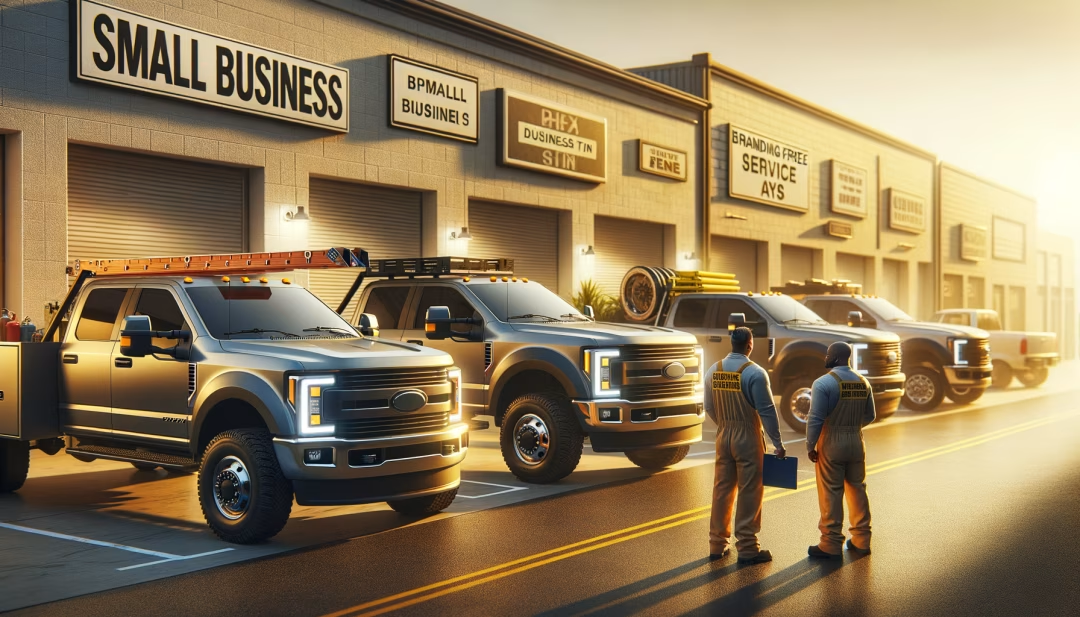
How to choose the best used truck for a small business
Every business uses a truck differently. An electrician might prioritize secure storage and payload for tools, while a landscaping crew needs towing strength and a longer bed. Delivery drivers want efficiency and tight turning, and mobile service teams often need crew comfort and power outlets. The right used truck balances capability, reliability, comfort, and total cost so the vehicle supports growth rather than draining cash flow.
- Payload and towing that safely cover your heaviest routine load with margin for growth
- Bed length, tie downs, and cargo management that match equipment and materials
- Cab style and seat count that fit your crew and hours on the road
- 4x2 for efficiency or 4x4 for job sites, winter routes, and unpaved access roads
- Gas for lower purchase price and lighter duty or diesel where high torque and longevity pay off
Who benefits most from a used truck
Some operations can use a compact hatchback or a cargo van. But many small businesses get the best return from a pickup with the right upfits. These owners typically benefit most from a smart used truck purchase:
- Contractors, electricians, and plumbers who need secure tool storage and ladder racks
- Landscapers and lawn care pros towing mowers, mulch, and trailers daily
- Delivery and courier services operating mixed urban and suburban routes
- Mobile services such as glass repair, locksmiths, or detailing with power and storage needs
- Farms and property managers who split time between road and off road tasks
Top used truck categories and common standouts
Midsize trucks for tight routes and efficiency
If you navigate city streets or crowded job sites, a midsize truck keeps costs and complexity down while still hauling gear. Many small businesses like Toyota Tacoma, Chevrolet Colorado, Ford Ranger, Nissan Frontier, and Honda Ridgeline for reliability and parking ease. Payload and towing vary by engine and package, so confirm the rating on the door jamb sticker and the owner manual before committing to a trailer plan.
Half ton light duty for all around versatility
Half ton models deliver the best blend of cab space, bed options, and capability. Ford F-150, Chevrolet Silverado 1500, Ram 1500, Toyota Tundra, and Nissan Titan are frequent shortlists. Look for factory tow packages, integrated brake controllers, and axle ratios that match your trailer weight. Many fleets seek V8 simplicity or proven turbo V6 options for a balance of torque and fuel economy.
Three quarter ton and heavy duty for frequent towing
When your business tows equipment or stock nearly every day, three quarter ton and above keep components cooler and brakes happier. Popular choices include Ford F-250, Chevrolet Silverado 2500HD, and Ram 2500. Diesel powertrains are common in this class for torque and longevity, though well equipped gas engines can be smart for lower upfront cost and simpler maintenance.
Match features to your workday
- Bed and storage: Spray in liners, tie downs, cargo tracks, toolboxes, and tonneau covers protect tools and inventory
- Towing setup: Factory hitch, 7 pin wiring, brake controller, and tow mirrors improve safety and control
- Power and tech: In bed outlets, upfitter switches, and camera systems save time on every stop
- Safety: Blind spot monitoring with trailer coverage, parking sensors, and forward collision alerts limit downtime
If you are comparing upfits or maintenance planning, our service team resources at schedule-service can help you map a routine that keeps the truck productive through peak season.
Budget tiers and value plays
Great small business trucks exist at nearly every price point. If you are targeting the best tradeoff of age, mileage, and price, consider high volume, well documented trims first. Many buyers find strong options in models that are three to seven years old, often with just one prior owner and robust service records.
For price focused routes, see best-used-trucks-under-20000. If fuel spend matters more than power, explore best-used-cars-with-good-gas-mileage or best-used-awd-vehicles for mixed weather operations. For job focused picks, compare best-used-trucks-for-work, best-used-trucks-for-hauling, best-used-trucks-for-electricians, best-used-trucks-for-plumbers, and best-used-trucks-for-construction-workers.
Reliability, lifespan, and ownership costs
Downtime costs more than repairs for many owners. Prioritize trucks known for durability, high owner satisfaction, and manageable maintenance. Useful research pages include most-reliable-used-trucks, used-cars-with-longest-lifespan, used-cars-with-lowest-maintenance-costs, and used-vehicles-with-best-warranty-coverage. Review recalls and service bulletins, and verify that major maintenance intervals are complete. A pre purchase inspection can surface pending items such as brakes, tires, and suspension components so you can budget accurately.
Gas vs diesel, mpg, and route planning
Gas trucks typically cost less to buy and maintain, and they warm up quickly on short routes. Diesel shines for sustained towing or high annual mileage thanks to torque and potential longevity. To estimate fuel spend, look beyond the highway rating and model your actual route with mixed driving, idle time, and payload. If city routes dominate, a midsize gas truck may win on total cost even if a diesel posts a better highway number. For more efficiency insights, browse used-cars-with-high-mpg.
Payload and towing made simple
Do not assume a trim level guarantees a specific rating. The yellow door jamb sticker lists payload for that exact truck. Towing depends on engine, axle ratio, cooling package, and hitch rating. Aim for a trailer and cargo plan that uses no more than 80 percent of the rated capacity in routine use. That buffer protects components, improves braking, and extends service life. If you are planning frequent camper or equipment towing, compare best-used-vehicles-for-towing and best-used-vehicles-for-hauling.
Inspection checklist and test drive plan
Use a structured process to avoid surprises. Start with the frame, underbody, bed, and hitch for signs of heavy towing or corrosion. Confirm the operation of 4x4, differential locks, and drive modes. Check cooling and charging systems, steering feel with weight in the bed, and transmission shifts at low and high loads. Verify camera views, trailer wiring, and sensors. For step by step help, bookmark used-car-buying-checklist, used-car-inspection-checklist, how-to-check-used-car-history, and used-car-vin-check-guide. You can plan time behind the wheel through schedule-a-test-drive when you are ready to compare multiple trucks on the same route.
Financing, trade in, and paperwork
Small businesses balance monthly cost and cash preservation. Explore applications to see prequalification options, review payment-options, and compare how-to-finance-a-used-car with how-does-used-car-financing-work. Learn about used-car-loan-interest-rates, down payment expectations at how-much-down-payment-for-used-car, and programs for buyers building credit at can-you-finance-a-used-car-with-bad-credit. If you are replacing a vehicle, estimate equity with value-my-trade. Protect your investment by reviewing used-car-warranty-guide, extended-warranty-for-used-cars, and used-car-gap-insurance-explained. Our policies are summarized in terms and visitor-agreement.
Seasonal and regional factors
If your routes include snow or dirt access roads, 4x4 with all terrain tires and skid plates will pay for itself in avoided delays. In hot regions, prioritize upgraded cooling and remote start. For rugged winters, see best-used-vehicles-for-winter-driving and best-used-cars-for-snow. If your deliveries include long highway stretches, compare best-used-commuter-cars for secondary fleet needs that do not require a truck.
Related guides and resources
Explore these in depth pages to fine tune your shortlist, understand market trends, and plan your budget with confidence.
- used-inventory and sold-inventory for real world examples and pricing history
- best-used-trucks, best-used-trucks-for-work, best-used-trucks-for-hauling for job matched picks
- most-reliable-used-trucks, used-cars-with-best-resale-value, used-cars-with-lowest-cost-of-ownership for value research
- used-car-market-trends and used-car-price-trends to understand timing and budgets
- blog, research-page-template, and top-selling-used-cars for ongoing insights
