

for Towing Small Trailers
If you are looking for the best used cars for towing small trailers, you are in the right place. This guide explains what tow ratings mean, how much small trailers actually weigh, and which used SUVs, minivans, and midsize trucks deliver the right blend of pulling power, comfort, and value. We also cover essentials like tongue weight, hitch classes, trailer wiring, and braking so you can set up safely and confidently.
Whether you plan to haul a lightweight utility trailer, a pair of jet skis, a small teardrop camper, or weekend landscaping gear, there are excellent used options that do not require a full size truck. Explore our recommendations and use helpful resources such as Used Inventory, Value My Trade, and Payment Options to make a confident decision for your towing needs.
Small trailers typically weigh between 500 and 2,800 pounds when loaded, which means many compact and midsize used vehicles can handle the job when properly equipped. Inside, you will find model suggestions, trim tips, and setup advice to help you pick a safe, dependable tow vehicle. For deeper research, visit Best Used Vehicles for Towing and our Research Page Template hub.
Understanding Small Trailer Towing
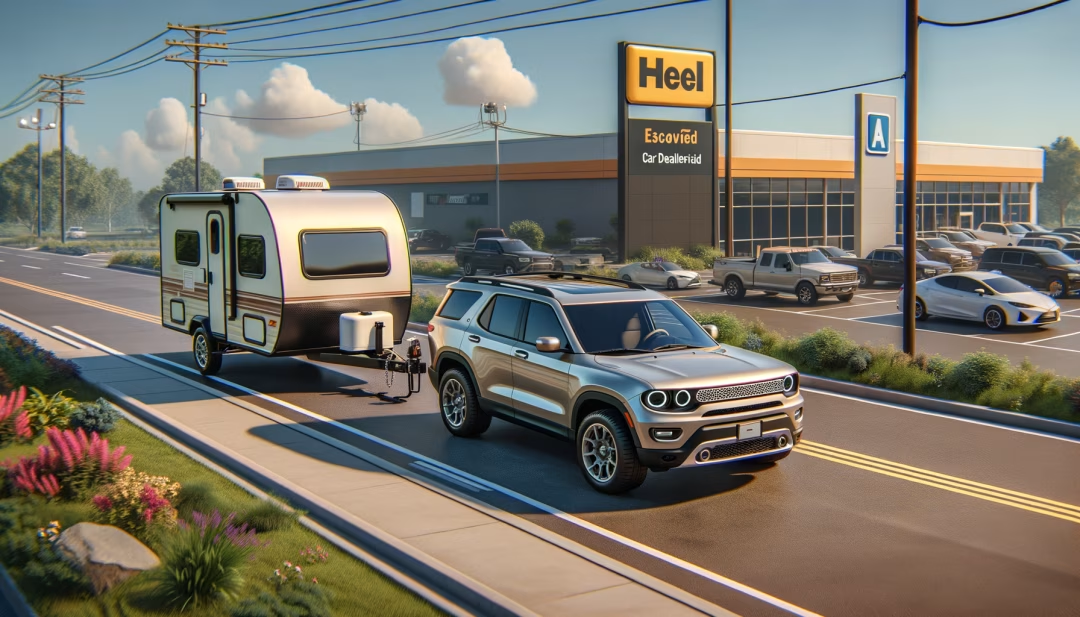
Small trailers include single axle utility trailers, lightweight cargo trailers, teardrop campers, small pop up campers, and personal watercraft trailers. Typical loaded weights range from about 500 to 2,800 pounds, though some well equipped teardrops and pop ups can approach 3,000 pounds. Because these weights sit below the tow ratings of many compact and midsize used vehicles, you can achieve stable and stress free towing without stepping up to a heavy duty truck.
To choose the right vehicle, match your loaded trailer weight to the manufacturer rated towing capacity, keep tongue weight in the recommended 10 to 15 percent range, and ensure you have the correct hitch, wiring, and braking setup. The right pairing protects your transmission, suspension, and brakes while improving control and confidence on the road.
Key Towing Terms Made Simple
- Towing capacity: The maximum trailer weight a vehicle can pull when properly equipped.
- Tongue weight: The downward force on the hitch, usually 10 to 15 percent of trailer weight.
- Payload: The weight your vehicle can carry inside plus tongue weight on the hitch.
- GCWR: Gross combined weight rating, the maximum for vehicle plus trailer and cargo.
- Hitch class: Class 2 and Class 3 are common for small trailer towing. Many crossovers use Class 2, while stronger setups often use Class 3.
Best Used Vehicle Categories for Small Trailers
The sweet spot for small trailer towing is often a compact or midsize SUV, a capable minivan, or a midsize pickup. Below are practical recommendations and common tow ratings when properly equipped. Always verify the specific vehicle rating on the door jamb label and in the owner manual, and confirm the presence of an approved tow package.
Compact and Midsize SUVs and Crossovers
Modern crossovers offer strong efficiency, comfortable ride quality, and tow ratings that suit small trailers. Look for factory tow packages, upgraded cooling, and 4 pin or 7 pin wiring.
- Toyota RAV4: Many trims 1,500 to 3,500 pounds with tow package. Adventure and TRD Off Road often rate higher when properly equipped.
- Subaru Outback: Typically 2,700 to 3,500 pounds depending on engine and package. Standard roof rails add utility for gear.
- Ford Escape: Commonly 1,500 to 3,500 pounds with the 2.0L turbo and tow package. Check for a Class 2 or 3 receiver and 4 pin wiring.
- Chevrolet Equinox and GMC Terrain: Often 1,500 to 3,500 pounds depending on engine and factory towing setup.
- Honda CR V: Typically 1,500 pounds. Pairs well with very light utility, bike, or small cargo trailers.
- Jeep Cherokee: 2,000 to 4,500 pounds with available V6 and tow package. Known for confident stability when loaded correctly.
- Kia Sorento and Hyundai Santa Fe: Many trims 2,000 to 3,500 pounds. V6 models offer stronger ratings.
Minivans That Tow Well
Minivans provide exceptional cargo room and stable wheelbases, which is great for small campers and utility trailers. Many rate at 3,500 pounds when properly equipped.
- Toyota Sienna: Typically up to 3,500 pounds with tow prep. Known for reliability and efficient powertrains.
- Honda Odyssey: Often up to 3,500 pounds when equipped. Strong V6 and smooth ride make long trips easy.
- Chrysler Pacifica: Generally up to 3,600 pounds when properly equipped. Stow n Go seating adds flexibility for gear.
Midsize Trucks for Extra Margin
If you want extra headroom for hills, cargo, or future upgrades, a midsize pickup offers strong frames and Class 3 hitch compatibility while staying maneuverable in town.
- Toyota Tacoma: Commonly 3,500 to over 6,000 pounds depending on engine, axle, and tow package.
- Ford Ranger: Often 3,500 to 7,500 pounds when properly equipped. Strong turbo torque helps with grades.
- Chevrolet Colorado and GMC Canyon: Many trims 3,500 to 7,000 plus pounds depending on engine and configuration.
- Nissan Frontier: Typically 3,700 to 6,700 pounds when properly equipped. Durable frames and simple setups are a plus.
How to Right-Size a Used Vehicle to Your Trailer
Start with a realistic loaded trailer weight, not just the empty weight. Add water, fuel, gear, coolers, and bikes to get a true number. Then choose a vehicle with at least a 20 percent capacity buffer to reduce strain on the powertrain and brakes. For instance, if your trailer will weigh 2,000 pounds loaded, aim for a tow rating of 2,400 to 3,000 pounds or more.
- Light utility or cargo trailers: Often 500 to 1,500 pounds loaded. Many compact crossovers are suitable.
- Jet ski or small boat trailers: Typically 1,000 to 2,200 pounds. A midsize SUV or a well equipped compact SUV works well.
- Teardrop and pop up campers: Usually 1,200 to 2,800 pounds depending on options. Consider midsize SUVs, minivans, or midsize trucks for margin.
Must Have Towing Equipment
The right equipment protects your vehicle and improves control. Many used vehicles can be upgraded easily through factory or aftermarket parts. For installation support, see Schedule Service.
- Receiver hitch: Class 2 for light loads, Class 3 for higher weights and a stronger connection.
- Wiring: 4 pin flat for basic lighting, 7 pin RV style for electric brakes and charging circuits.
- Brake controller: Required or recommended for heavier small trailers. Smoother, safer stopping.
- Transmission cooler: Helps manage heat under load on grades and in hot weather.
- Tow mirrors or blind spot coverage: Improves visibility and lane changes.
Driving and Safety Tips for Small Trailers
Small trailers can be surprisingly stable with the right setup. Maintain balanced cargo, correct tire pressures, and a steady, patient driving style.
- Keep tongue weight near 10 to 15 percent to reduce sway.
- Use Tow or Haul mode when available for better shift logic and engine braking.
- Drive slower than usual, leave extra following distance, and brake gently to control heat buildup.
- Avoid loading heavy items high or behind the trailer axle to reduce sway risk.
- Practice backing in an empty lot to master slow, small steering inputs.
Budget Friendly Picks by Price Range
There are solid towing options at almost every budget. To explore real world examples and pricing, visit Used Inventory and compare with our budget guides below.
- Under 15,000 dollars: Older Toyota RAV4, Subaru Outback, Ford Escape, Chevrolet Equinox. See Best Used Cars Under 15000.
- Under 20,000 dollars: Kia Sorento, Hyundai Santa Fe, Honda Odyssey, Toyota Sienna. See Best Used Cars Under 20000.
- Under 25,000 dollars: Toyota Highlander, Jeep Cherokee V6, Toyota Tacoma, Ford Ranger. See Best Used Cars Under 25000.
Reliability, Ownership Costs, and Features to Seek
Towing adds thermal and mechanical stress, so prioritize vehicles known for strong drivetrains and cooling. Reliability and lower maintenance can keep total ownership costs predictable. Explore brand and model reliability resources at Most Reliable Used Cars, Most Reliable Used SUVs, and Most Reliable Used Trucks.
- A genuine tow package with upgraded cooling and hitch hardware.
- Driver aids like blind spot monitoring and a backup camera for hitching accuracy.
- All wheel drive for traction on wet ramps or gravel, though front wheel drive is fine for many loads.
- Factory 7 pin wiring and a built in or easily added brake controller.
Inspection Tips for a Used Tow Vehicle
Ask about prior towing, verify the hitch class and wiring, and inspect transmission fluid condition. An inspection can catch wear on brakes, suspension bushings, and cooling components before you load up for a trip. Use our Used Car Inspection Checklist and book a visit through Schedule Service.
- Check for evidence of overheating such as burnt fluid or a history of cooling system repairs.
- Inspect tires for even wear and confirm load ratings meet your needs.
- Verify trailer light functions with a tester and confirm a secure ground.
Set Your Budget and Compare Options
Balancing capability and cost is easier with clear numbers. You can estimate monthly payments, compare interest rates, and understand down payment options using Payment Options and Applications. If you have a current vehicle, check trade value through Value My Trade. For brand and segment shortlists, browse Best Used SUVs, Best Used Trucks, and Best Used Minivans.
Related Resources and Next Steps
For towing focused research beyond small trailers, visit Best Used Vehicles for Towing, Best Used Vehicles for Towing Boats, and Best Used Trucks for Work. You can learn buying basics in How to Buy a Used Car, compare financing in How Does Used Car Financing Work, and sharpen negotiation skills with How to Negotiate a Used Car Price. General site info is available at About Us and our latest insights live on the Blog.
Frequently Asked Questions
Explore more helpful pages: Used Inventory, Sold Inventory, Schedule a Test Drive, Contact Us, and Visitor Agreement. For policies, see Privacy Policy and Terms. Meet our team at Meet Our Staff and share feedback at Customer Survey.
