

for Rural Driving Guide
Living outside city limits brings unique demands for a vehicle. This guide to the best used cars for rural driving explains what to look for on gravel, washboard, and unpaved roads, plus seasonal mud and snow. We outline smart features like all wheel drive or four wheel drive, extra ground clearance, durable suspensions, and all terrain tires that deliver dependable traction and comfort. You will also find model suggestions across compact cars, crossovers, SUVs, and trucks, including options suited for farms, ranches, and long county road commutes. Learn how to evaluate a used vehicle for rural use, from underbody inspection to 4x4 system checks, and how to balance capability with fuel economy and reliability. When you are ready to explore vehicles that fit this checklist, browse used-inventory, compare categories like best-used-awd-vehicles and best-used-trucks, and review buyer resources such as used-car-inspection-checklist and value-my-trade.
Rural life asks more of a vehicle, and a smart used choice can handle workdays, back roads, and weekend chores with confidence. Our research hub links to ownership tips, safety insights, and budgeting pages so you can choose with clarity. Explore used-inventory, research-page-template, schedule-service, payment-options, locations, and contact-us to learn more about inspection standards, financing paths, and maintenance support built for life beyond the pavement.
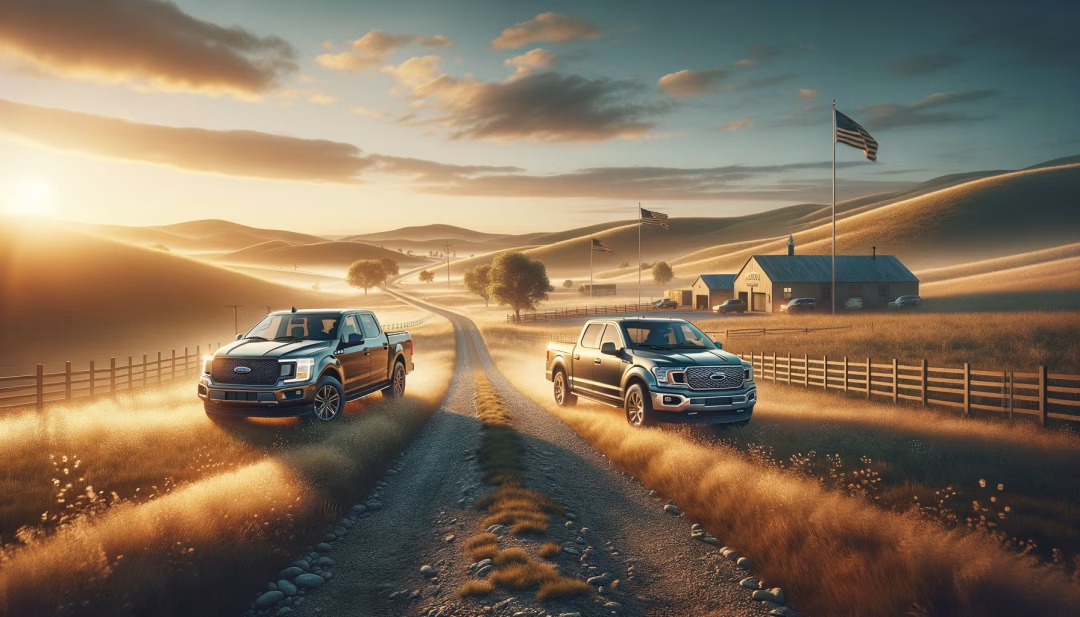
What rural drivers need from a used vehicle
Rural roads vary from freshly graded gravel to deeply rutted two tracks. In winter or rainy seasons, traction can change by the mile. Long distances between towns increase the value of comfort, range, and reliability. To match these realities, prioritize capability, durability, and serviceability without sacrificing efficiency and safety.
- Confident traction with AWD or 4x4 and a rear differential that can manage uneven surfaces
- Ground clearance of roughly 7.5 to 9.5 inches for ruts, crowned roads, and snow berms
- All terrain or severe snow rated tires for mixed surfaces and shoulder stability
- Strong suspension components and underbody protection to resist gravel and debris
- Cargo flexibility for tools, feed, or fencing, with roof rails or a bed for odd loads
- Long range and reasonable fuel costs for distant trips into town
- Easy service access and available parts for quick fixes at local shops
Top used vehicle categories for rural roads
The right platform depends on your mix of chores, commute, weather, and terrain. Here are proven categories with example models to consider. Always verify trim, year, and equipment because capability varies across configurations.
Compact AWD cars and crossovers
- Subaru Crosstrek and Impreza AWD - good clearance and stable AWD for gravel and light snow
- Subaru Outback - wagon practicality with SUV like ride height and long distance comfort
- Mazda CX-5 AWD - composed ride on washboard, strong safety tech, efficient engines
Midsize and family SUVs
- Toyota RAV4 AWD - capable on unpaved routes, available Adventure and TRD Off Road trims
- Honda CR-V AWD - balanced comfort and efficiency for long county trips
- Subaru Forester - tall glass area for visibility, standard AWD, useful cargo space
Half ton trucks for work and towing
If your rural routine includes towing implements, hauling hay, or regular ranch tasks, a 4x4 truck with off road package and LT rated tires may be the best fit.
- Ford F-150 4x4 FX4 - stronger shocks, skid plates, and useful tow tech on many trims
- Chevrolet Silverado 1500 Z71 - off road suspension with hill descent control on select years
- Ram 1500 4x4 - smooth ride on rough roads, available off road packages and rear lockers on some trims
- Toyota Tacoma 4x4 - midsize size is easier on narrow lanes, TRD Off Road and Pro variants add trail gear
3 row and body on frame SUVs for rugged terrain
- Toyota 4Runner - high clearance and robust 4x4 systems, ideal for rough tracks and ranch use
- Chevrolet Tahoe 4x4 - strong towing with room for crew or family
- Honda Pilot AWD and Subaru Ascent - family friendly cabins with confidence on dirt roads
Efficient rural options and hybrids
If most miles are on paved county highways with occasional gravel, a hybrid or efficient AWD crossover can cut fuel bills without giving up mixed surface stability.
- Toyota RAV4 Hybrid AWD - excellent range, available trail friendly trims in some years
- Honda CR-V Hybrid AWD - efficient cruiser with traction support for poor weather lanes
AWD vs 4x4, ground clearance, and tires
AWD systems automatically route power to the axle with the most grip, which helps on loose gravel and wet grass. They excel for drivers who transition between pavement and dirt often. Part time 4x4 adds a selectable transfer case for low range and is better for crawling through muddy gates, pulling loads slowly, or climbing uneven two tracks. Full time 4x4 and advanced AWD systems that include a locking center clutch can offer a blend of both behaviors.
Ground clearance helps avoid dragging the belly on ruts and keeps sensitive components away from rocks. Around 8 to 9 inches is a sweet spot for many rural routes, while trucks and off road SUVs often provide more. Tires are your only contact patch. For mixed pavement and dirt, look for all terrain tires with a mild tread and 3 Peak Mountain Snowflake rating in winter regions. In deep mud, a more aggressive tread helps, but it can add noise and reduce efficiency on long highway stretches.
Ownership tips for rural use
- Rotate tires and align more frequently if you drive on washboard or rutted roads to preserve tread life
- Rinse the undercarriage to prevent rust after winter road treatments or muddy days
- Inspect shocks, bushings, tie rods, and wheel bearings at scheduled services for early wear
- Keep a full size spare, inflator, jack board, recovery strap, and basic tool kit in the vehicle
For maintenance scheduling and repairs, see schedule-service. To plan total cost, compare used-cars-with-lowest-maintenance-costs and used-cars-with-lowest-cost-of-ownership.
How to shop a used car for rural duty
Beyond a standard test drive, check components that carry extra stress on back roads. Crawl under the vehicle with a flashlight and look for scrapes on skid plates, cracked dust boots, seepage at the differential or transfer case, and any loose heat shields. Verify 4x4 engagement and low range operation where applicable. On a rough side street, listen for clunks over bumps and check for steering vibration that could point to worn bushings or tires cupped by washboard.
- Review service history and any open recalls before deciding. See used-car-history and used-vehicles-with-lowest-recall-rates for guidance
- Use used-car-inspection-checklist and used-car-buying-checklist to structure your evaluation
- Consider certified-pre-owned-vs-used to weigh warranty coverage and reconditioning
When you are comparing budgets or loan scenarios, explore value-my-trade, applications, payment-options, and how-to-finance-a-used-car. Browse used-inventory and sold-inventory to understand typical trims and equipment that pass through the market.
Budget friendly rural picks
Pricing and availability differ by region and mileage. Use the following as starting points, then confirm condition and equipment on the specific vehicle you find.
- Under 10000: older Subaru Forester or Outback with maintenance records, compact 4x4 trucks with higher miles. See best-used-cars-under-10000 and most-reliable-used-cars-under-10000
- Under 15000: Toyota RAV4 AWD and Honda CR-V AWD from earlier generations, select midsize 4x4 trucks with work ready trims. See best-used-cars-under-15000 and most-reliable-used-cars-under-15000
- Under 20000: newer Forester or CX-5 AWD, F-150 4x4 or Silverado 4x4 with mid trims. See best-used-cars-under-20000 and best-used-trucks-under-20000
Safety and visibility features for the countryside
Wildlife crossings, unlit roads, and farm equipment on narrow lanes reward clear visibility and driver assistance. LED or HID headlights, fog lights, and automatic high beams help you see further without blinding oncoming traffic. Blind spot monitoring with rear cross traffic alert is useful when backing from tree lined drives. Front and rear cameras simplify aligning a trailer and checking ruts. If you tow, look for an integrated trailer brake controller, extendable mirrors, and a transmission cooler. For more safety research, visit used-cars-with-best-safety-ratings, safest-used-suvs, and used-cars-with-best-crash-test-ratings.
Tires, spares, and seasonal planning
Tire choice is a performance upgrade you can feel daily on rural roads. A mild all terrain tread with reinforced sidewalls stabilizes the vehicle on gravel and resists punctures. In winter states, a dedicated snow tire set can cut stopping distances dramatically on packed snow and ice. Always carry a full size spare with adequate tread, and periodically test your jack and lug wrench. If your route includes mud during spring thaw, consider tire chains where legal and select a tread that self clears at lower speeds.
Helpful research and comparison links
- Inventory: used-inventory
- Capability: best-used-awd-vehicles, best-used-trucks, best-used-vehicles-for-winter-driving
- Budget: best-used-cars-under-10000, best-used-cars-under-15000, best-used-cars-under-20000
- Buying help: used-car-buying-checklist, used-car-inspection-checklist, how-to-avoid-buying-a-bad-used-car
- Ownership: used-cars-with-lowest-maintenance-costs, used-cars-with-lowest-insurance-rates
Frequently asked questions about used cars for rural driving
About us and next steps
Learn more about our team at meet-our-staff and bios, view customer insights at customer-survey, and explore articles at blog and research-page-template. For legal and privacy details see privacy-policy, terms, and visitor-agreement. To plan your visit, see locations. When you are ready to compare vehicles, start at used-inventory and keep this guide open as your rural checklist.
